PACIFIC leaders and development partners must move beyond strategic commitments and deliver practical action that improves the daily lives of Pacific people, a leading Palauan disability rights advocate has told a regional security forum.
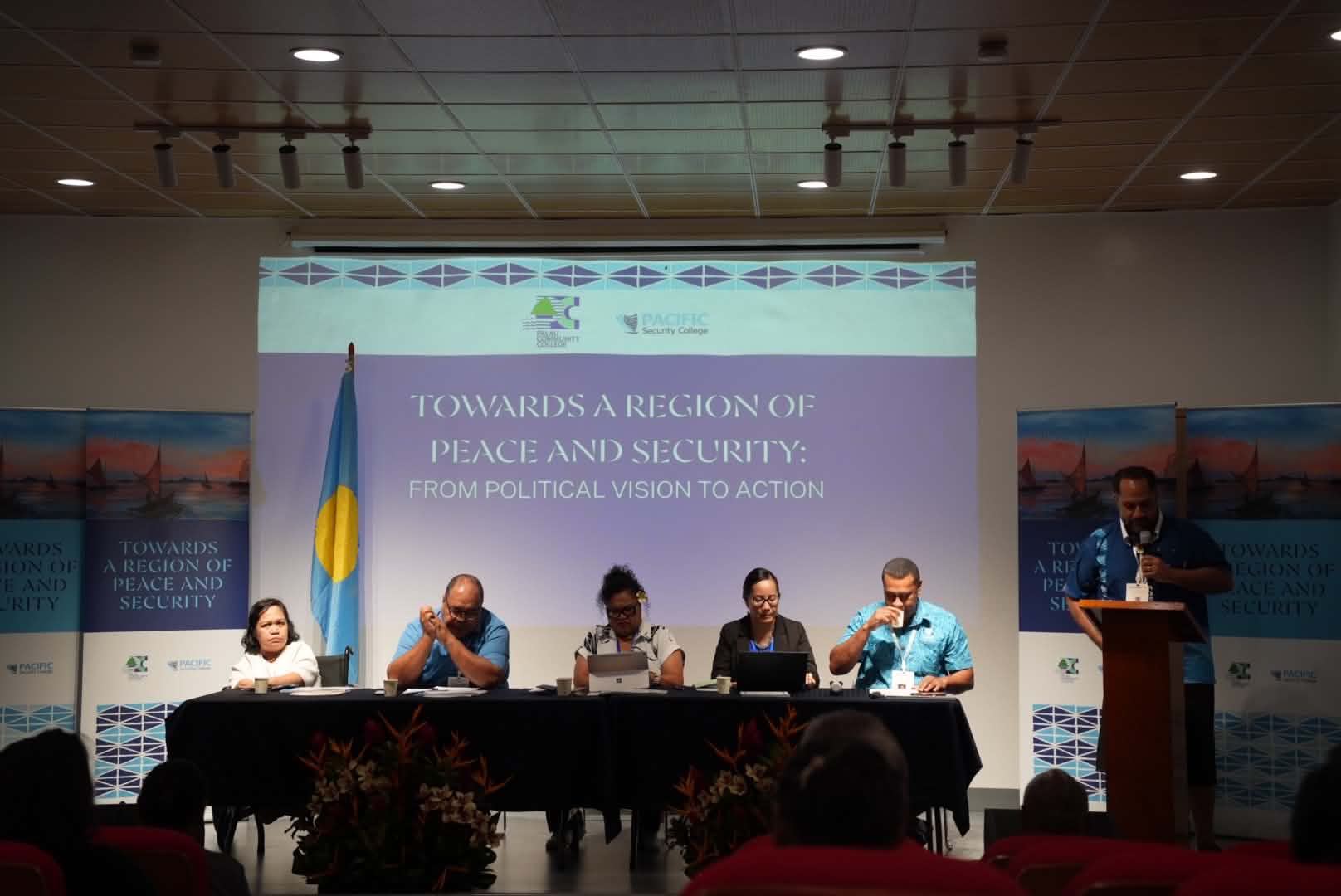
Villaney Remengesau, who was elected in June to the United Nations Committee on the Rights of Persons with Disabilities, made the call during a panel discussion at the side event ‘Towards a region of peace and security: From political vision to action’, held alongside the 55th Pacific Islands Forum Leaders Meeting in Koror.
The event, hosted by the Pacific Security College and Palau Community College, brought together representatives from government, civil society, education and regional organisations to examine how Pacific security priorities can be translated into practical implementation.
Remengesau said the success of regional commitments should ultimately be measured by whether they produce tangible improvements in people’s everyday lives.
“If we meet again in three to five years, we want to see real changes in our lives, in our daily lives. Enough talking. We need action,” she said.
She said practical action should strengthen communities against the growing range of challenges facing the region, including climate change, disasters, economic and energy insecurity, online threats and organised crime.
“We want to see a stronger community that is resilient, better prepared for climate change and disaster,” Remengesau said.
“We also want to see stronger economic and energy security, more opportunities for our people.”
For Remengesau, security must also extend to the safety of communities both online and offline.
“We also want to see safer communities, that is that we have protection for our people against online and offline threats and organised crimes,” she said.
She also called for greater participation by young people in decision-making, warning that policies developed today would shape the future they inherit.
“And we want to see more younger people involved in the decision-making process because the decisions made today will impact their future,” she said.
Remengesau said stronger coordination between Pacific regional organisations and development partners was also essential if regional priorities were to translate into meaningful outcomes.
“We need to ensure that our regional organisations and development partners work closely together, are better coordinated, so they can deliver better results for the people,” she said.
She said the Pacific already had no shortage of priorities, strategies and commitments, but the challenge was ensuring these were reflected in the lives of Pacific communities.
“We have many priorities, but we don’t see the results affecting the lives of our people,” Remengesau said.
“So, we want actions. We want to see the results.”