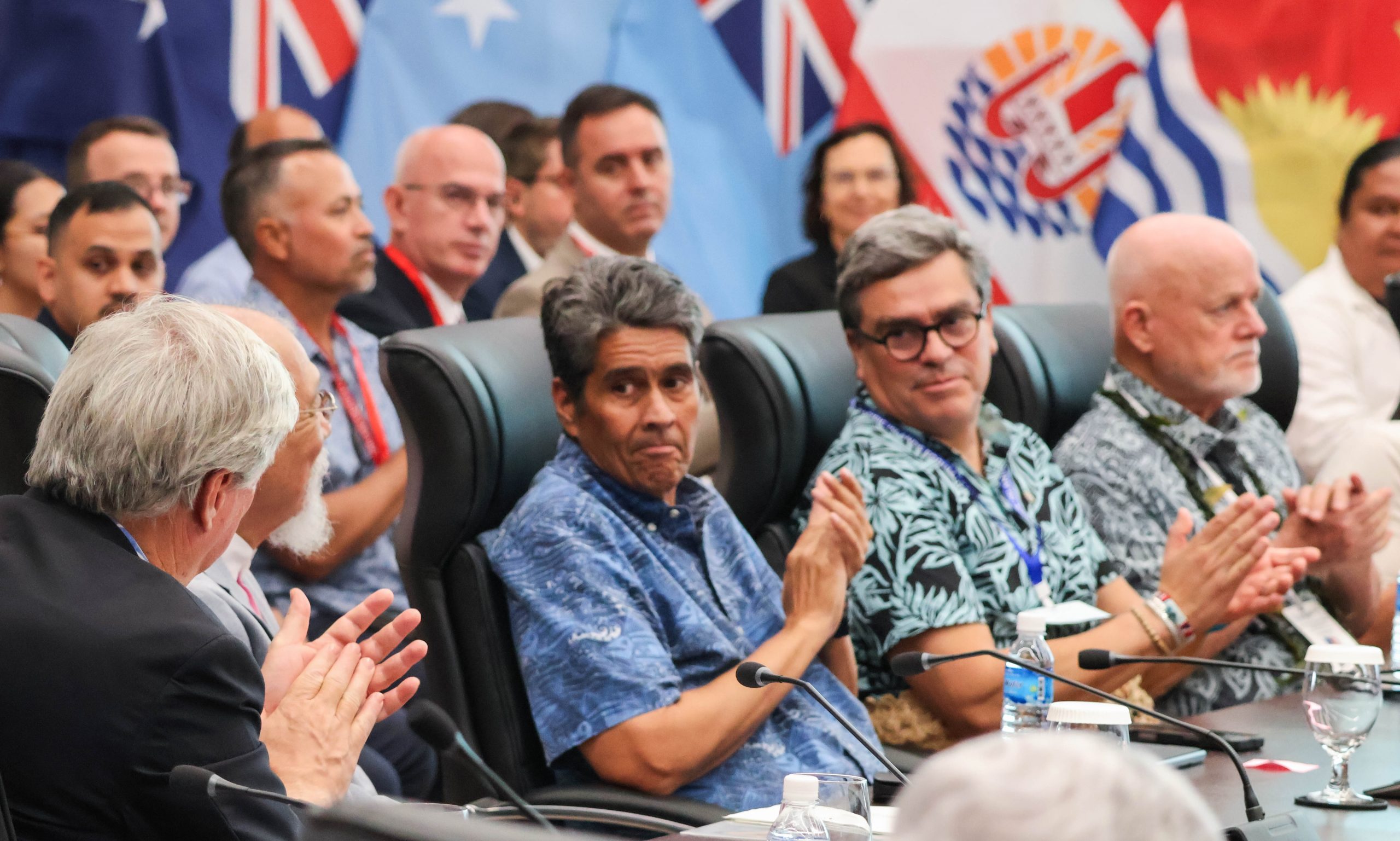
SHIFTING geopolitics, economic uncertainty and transnational threats will frame discussions when Pacific leaders meet here in Palau for the 55th Pacific Islands Forum Leaders Meeting.
Speaking at a Regional Media Workshop ahead of the meeting, Pacific Islands Forum Secretary General Baron Waqa said Pacific media had a central role in carrying regional priorities and decisions through Pacific voices.
“Your presence is a strong testament to the important role of the media in our region – to ensure that Pacific stories are told by Pacific voices, from a Pacific perspective,” Waqa said.
He said journalists would play an important role in informing Pacific communities, strengthening public understanding and communicating the outcomes of the Leaders’ Meeting.
Waqa said this year’s theme, B.E.L.A.U – Building Economies: Life. Action. Unity, reflected the region’s collective priorities of building resilient economies, improving the lives of Pacific people, translating commitments into action and strengthening regional unity and solidarity.
Forum Deputy Secretary General Esala Nayasi said leaders were meeting at a time of significant geopolitical and political change, making regional unity and collective action more important than ever.
“The unity and solidarity, the commitment that our leaders have to work together, to collaborate and speak with one voice is a lot more important than ever before,” Nayasi said.
He said the region has faced significant challenges over the past year, with shifting geopolitics adding pressure to countries already dealing with economic and social challenges.
“Geopolitics and the shifting political landscape in the region is one that we cannot turn a blind eye to,” he said.
Nayasi said the challenges were being felt not only at the regional level, but also by communities and vulnerable people across the Pacific.
Economic issues, political leadership, regionalism and sustainable development are expected to feature prominently in leaders’ discussions.
He said the breadth of the agenda reflected priorities identified by Forum members, with officials considering 28 agenda items at their meeting earlier this year.
“It speaks to where we are as a region,” Nayasi said. “It speaks to priorities that our members identify that are important for the region to push through collectively rather than as individual countries.”
Transnational crime is also emerging as a major regional concern, particularly drug trafficking and its associated impacts, including HIV-related issues.
Nayasi said Forum leaders had previously acknowledged the growing challenge and called for a regional approach to address it.
He said the issue demonstrated why regionalism remained critical.
“We can’t implement or we can’t do things on our own in terms of countries,” he said. “It is important that there are issues that we need to work together and deliver together as one collective voice, as one unit.”
A major issue before leaders will be reviewing the regional architecture, including the Forum’s partnership mechanism and the Council of Regional Organisations in the Pacific (CROP).
Nayasi said the review would consider how the regional system could work better together and support implementation of the 2050 Strategy for the Blue Pacific Continent.
Partnerships will also be examined as geopolitical dynamics continue to shift, with the region considering how it engages with partners moving forward.
Economic pressures, including the emerging fuel crisis, will also require collective attention. Nayasi said a regional response mechanism was being developed for leaders to consider. Climate change, sustainable development and resilience financing are also expected to feature, alongside progress towards facilitating a visit by the United Nations Human Rights Commissioner to West Papua.