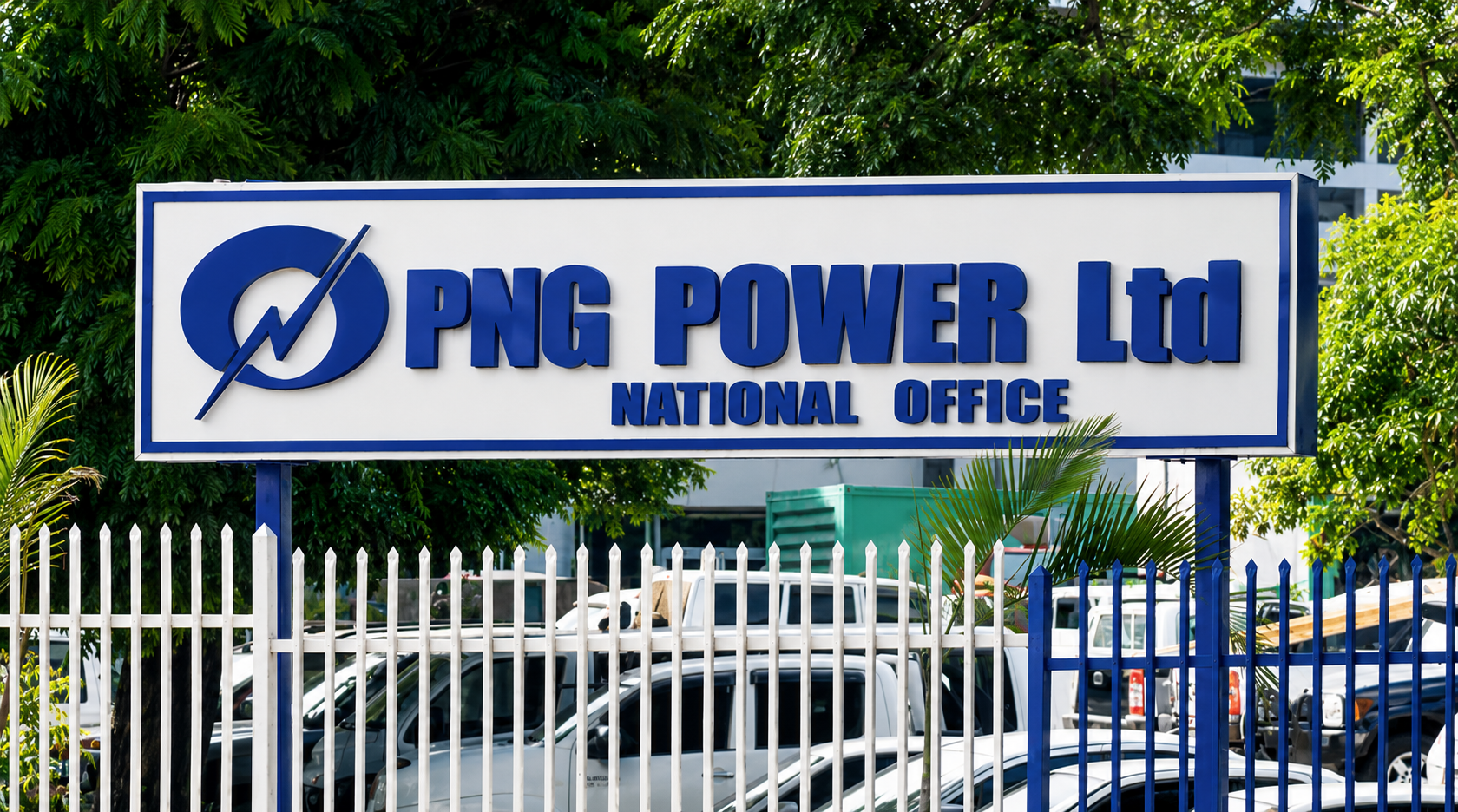
PAPUA New Guinea’s mani power company faces a “terminal” financial and operational condition after decades of underinvestment, ageing infrastructure and poor revenue collection.
This has forced the government to pursue structural reforms, provincial partnerships and partial privatization for PNG Power.
Prime Minister James Marape told Parliament that the state-owned electricity utility has been undergoing reforms since 2023 to make it financially sustainable, improve efficiency, and expand access to reliable power across the country.
“PNG Power is a very sick state-owned enterprise,” Marape said in response to a question from West New Britain Governor Sasindran Muthuvel.
“If I were to make an example of cancer, it is in a terminal stage. It is no longer stage one, stage two or stage three. It is in stage four. That is the honest assessment of the company that supplies power to our nation.”
The government’s assessment follows independent reviews, including work undertaken by Deloitte, which confirmed the scale of PNG Power’s financial and operational difficulties, Marape said.
The utility’s problems stem from years of inadequate maintenance, ageing assets, rising operating costs and weak revenue collection, affecting generation, transmission, distribution and billing systems.
“For decades, routine maintenance has not kept pace with the ageing assets built from the 1970s, 1980s, 1990s and beyond,” Marape said.
“In one major centre on the Highlands grid, around 80 per cent of customers do not pay for electricity. No utility can remain financially healthy under those circumstances.”
The government had also avoided major electricity tariff increases for many years to protect consumers, even as the cost of delivering power continued to rise.
“There has never really been a tariff increase over many years because we wanted to help our people,” Marape said. “Only recently have we allowed a modest increase, but PNG Power continues to struggle under enormous debts and liabilities.”
The government has invested almost K1.5 billion in critical electricity infrastructure, including a new 132-kilovolt transmission line linking Edevu to Port Moresby. The project has enabled an additional 54 megawatts of power to be supplied to the National Capital District, Marape said.
But he said further investment would not resolve the utility’s problems without structural change.
“Our Government has continued investing in infrastructure, but the company now requires decisive structural reform to remove the parts of the business that are no longer sustainable while strengthening those that remain viable,” he said.
Provincial Power Management Reform
A centrepiece of the reform programme will be the gradual transfer of loss-making “C centres” to capable provincial governments and other qualified operators under regulated arrangements.
Marape said the plan would not amount to a simple sale of assets. It was intended to protect consumers, maintain service delivery and prevent excessive tariff increases.
“We are looking at provinces that have the capacity to operate their own power companies under licence through the National Energy Authority, which our Government established as part of these reforms,” he said.
Proposals involving East and West Sepik are already being examined, with PNG Power potentially partnering with provincial governments or other qualified operators.
The approach would give provinces a greater role in managing power generation and distribution while retaining PNG Power as a strategic partner, Marape said.
“There is nothing wrong with provincial governments owning or partnering in power companies while PNG Power continues as a strategic partner,” he said.
The government is also looking to the successful operation of the Ok Tedi power subsidiary as an example of how provincial and resource-sector partnerships could improve electricity services in other regions.
Under the proposed model, PNG Power would concentrate on maintaining the major national grids serving Port Moresby, Lae and the Highlands, while more generation and distribution responsibilities would be managed closer to the people.
Further policy details are expected before the Mining, Petroleum and Energy Conference later this year.
“Our objective is to build a stronger, financially sustainable electricity sector that delivers reliable and affordable power to Papua New Guineans while creating opportunities for provinces to participate directly in energy development.”