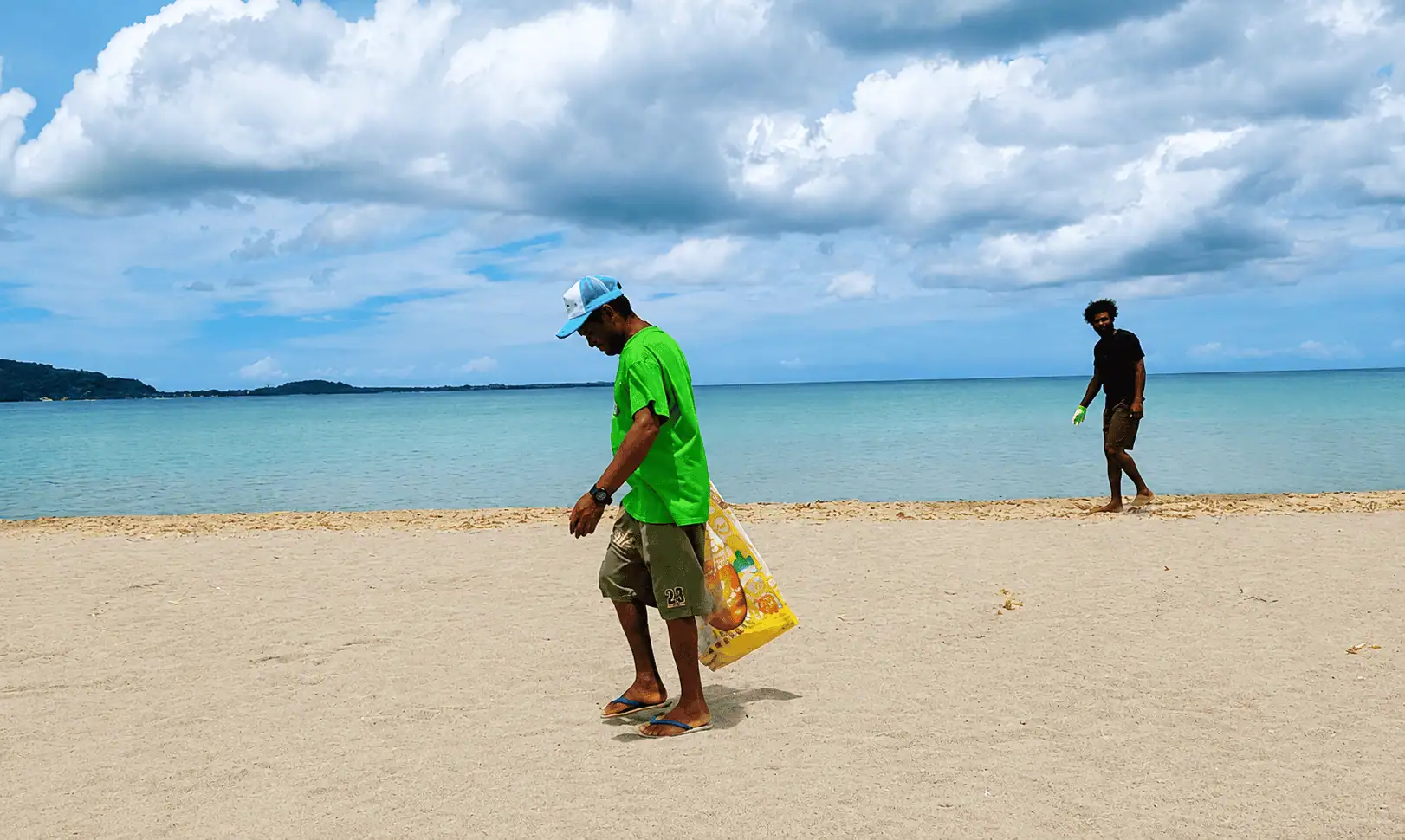
PACIFIC countries have increased efforts to tackle waste and pollution through SWAP2, a regional project supporting cleaner waste management and pollution reduction across island countries and territories.
Representatives from nine Pacific Island countries and territories met at SPREP headquarters in Apia this week to review progress under SWAP2 and agree on priorities for the next phase.
Funded by the Agence Française de Développement (AFD) through a $EUR4.3 million investment and implemented by SPREP, SWAP2 supports Fiji, French Polynesia, Kiribati, Samoa, Solomon Islands, Tonga, Tuvalu, Vanuatu, and Wallis and Futuna.
It advances the Cleaner Pacific Strategy by improving waste infrastructure, building capacity and strengthening regional collaboration.
SPREP Director General Sefanaia Nawadra said Pacific countries were showing that regional cooperation and evidence-based action can deliver practical solutions to one of the region’s most pressing environmental challenges.
“The challenges posed by waste and pollution are growing across our region, but Pacific countries are showing leadership through innovation, regional cooperation and evidence-based decision-making,” he said.
Since SWAP2 began in 2020, countries have completed 108 beach surveys and audited more than 106,000 marine-litter items, creating data that helps governments identify pollution hotspots, shape waste policies and contribute to global plastics treaty negotiations.
Nawadra said the progress gives SWAP2 a strong platform to accelerate implementation in its remaining years.
“These achievements provide a strong foundation for SWAP2 to accelerate implementation. They are also generating practical experiences and evidence that can be shared across the region to support better waste management outcomes for all Pacific Island countries and territories,” he said.
In Samoa, SWAP2 has delivered results in marine litter management, waste audits, used-oil management, public awareness and technical training.
More than 60,000 litres of stockpiled used oil have been exported and treated, reducing environmental and public health risks.
Lealaisalanoa Brown Reupena, Chief Executive Officer of Samoa’s Ministry of Natural Resources and Environment, said SWAP2 had strengthened collaboration between government, communities, the private sector and development partners.
“Our waste audits and marine-litter surveys are providing valuable data to support better planning and policy decisions, while SWAP2 has also enabled the environmentally sound export and treatment of more than 60,000 litres of stockpiled used oil,” she said.
Beyond Samoa, SWAP2 is trialling used-oil solutions in Kiribati and Solomon Islands, supporting women-led plastic recycling in Vanuatu, establishing reuse centres in French Polynesia and developing a scrap-metal recovery facility in Wallis and Futuna.
The two-day Steering Committee Meeting ended with members reaffirming their commitment to accelerate SWAP2 implementation and deliver lasting environmental, economic and social benefits for Pacific communities.