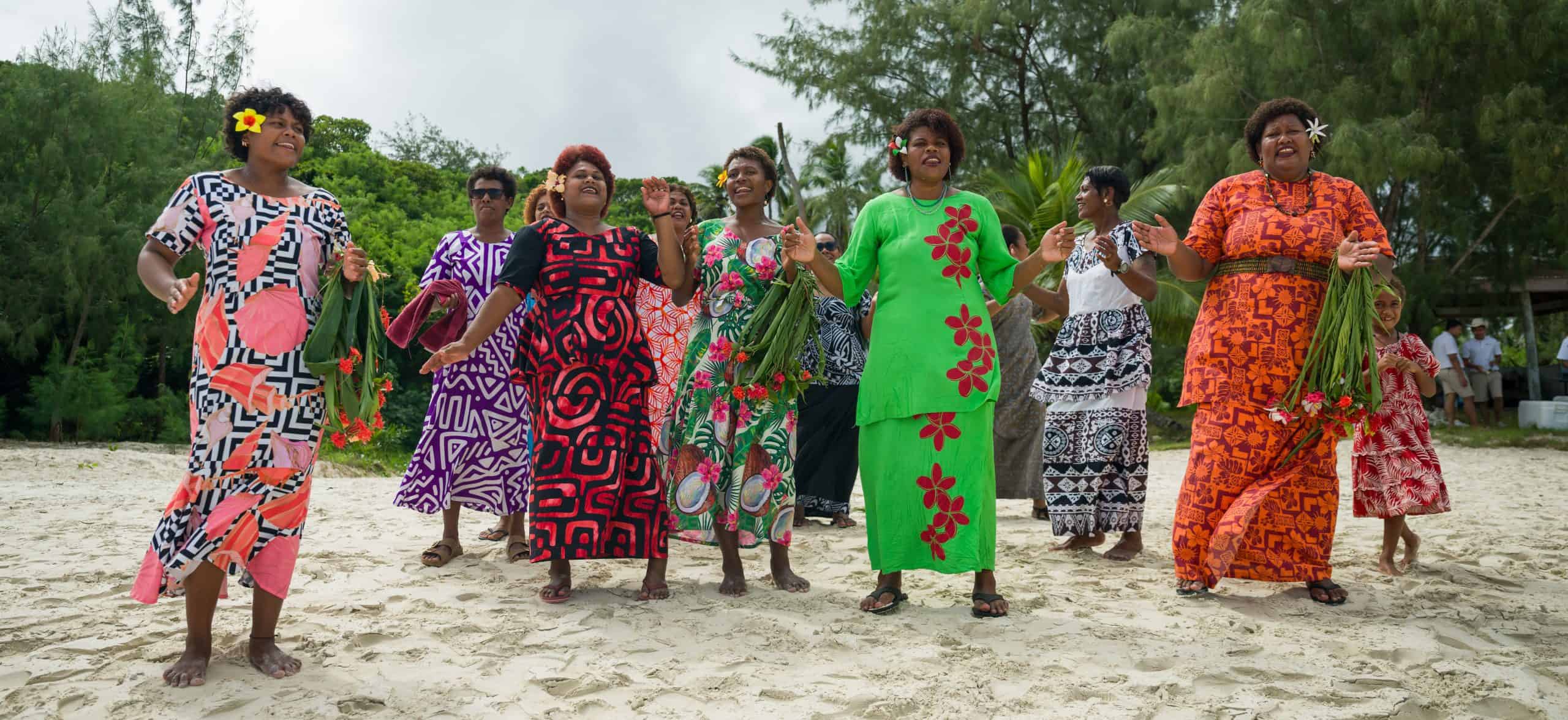
Cruise tourism is bringing fresh income and renewed optimism to Yasawa-i-Rara in Fiji’s Yasawa Group, as improved maritime access allows expedition vessels to return to the remote island after a 16-year break. The latest visit by the expedition cruise ship Seabourn Pursuit, its third call to the island, brought more than 180 tourists ashore and reinforced growing confidence in Yasawa-i- Rara as a destination for expedition-style cruise tourism. For a village that had fallen off cruise itineraries despite its natural appeal, the return of passengers is seen as more than a tourism success story. It signals how remote communities can regain access to global visitor markets when investment in hydrographic mapping and community-led readiness are combined – offering a practical model to help unlock tourism in other maritime communities across the Pacific.
Unlocking access through partnership
The revival has been made possible through updated nautical charts developed via a public–private partnership involving the Republic of Fiji Navy’s Fiji Hydrographic Service and Transam Fiji Limited, with support from Australia’s Market Development Facility. The iTaukei Trust Fund Board also supported community readiness training ahead of cruise calls.
Together, these efforts addressed two key barriers facing remote tourism destinations: safe access for vessels and local capability to host visitors in an organised and beneficial way.
Cruise visits to Yasawa-i-Rara ended around 2008 due to outdated nautical charts that no longer met international maritime safety and insurance requirements.
“Hydrography goes beyond safe navigation. It opens economic opportunities for communities,” explained Fiji Hydrographic Service Director, Commander Jervis Robinson, noting that many of Fiji’s charts are based on historical surveys dating back decades.
He said updated charts provide confidence for cruise operators and insurers, and reduce risks for vessels operating in unfamiliar waters. “Before any ship visits our ports or harbours, they need to know the depth of the waters for safe navigation,” he said.
The hydrographic survey of Yasawa-i-Rara was completed in 2019, with updated nautical charts issued in 2021.
This enabled cruise tourism to resume when vessels returned after the pandemic, including the first call by Seabourn Pursuit in April 2024. The most recent visit on 2 May was its third.
Direct economic benefits for communities
Each visit generates income through anchorage, guided tours, handicraft sales, cultural performances and locally prepared food with households participating collectively to maximise opportunity.
Matanivanua Levu (senior spokesperson) to Tui Yasawa, Naelesoni Toqitoqi said that the people of Yasawa-i-Rara welcomed the opportunity to host cruise tourism once again, and the training prepared the community well to welcome guests.
“The Vanua agreed to host cruise ships again because it contributes to achieving our development plans,” said Toqitoqi. Ahead of cruise tourism’s return, the community worked with the iTaukei Trust Fund Board and the Market Development Facility on training in hospitality, hygiene, first aid, tour guiding and handicraft production.
“When we used to host cruise guests before, things were not very organised. Through the training, we were taught ways to better organise ourselves as a community, so everyone knew exactly what their roles were. We also now better understand the different types of tourists on cruise ships,” Toqitoqi said. Turaga ni Koro (village headman) Maikeli Dagatu said cruise tourism has brought visible improvements to village life. He said villagers now work collectively, through “solesolevaki” (a traditional system of working together to achieve a common goal), whenever a ship visit is scheduled.
“We set aside our daily responsibilities to work together in preparation,” he said.
Preparations include cleaning and organising village spaces, preparing food, setting up handicraft stalls, coordinating guides and readying landing areas for visitors.
“The unity shown during these times has benefited the people, the land and the village,” said Dagatu.
He said tourism income in the past has contributed to visible development, and for many households, income from cruise visits enables them to cover school costs, daily needs, church obligations and traditional commitments.
Distinctive and authentic visitor experiences
While the economic benefits are tangible, it is the quality and authenticity of the experience shaped by culture, community and natural beauty that continues to draw cruise operators and visitors back to the island.
Visitors are offered guided walks, refreshments and cultural experiences that reflect village life.
One visitor from London said the experience stood out fromtypical cruise stops.
“It’s very interesting to experience village life… villagers are very welcoming and kind.”
Another visitor said tourism should be managed carefully. “We will tell people about Yasawa-i-Rara, but we will be careful, so tourism does not spoil their way of life or environment.”
Dom del Rosario, expedition leader aboard Seabourn Pursuit, has described Yasawa-i-Rara as one of the most outstanding destinations in the South Pacific.
“Fiji—and particularly Yasawa-i-Rara—consistently ranks among the most beautiful places we have visited,” he said.
He stressed the importance of updated hydrographic mapping, saying accurate nautical charts are critical for modern expedition vessels navigating smaller waterways and landing directly on remote beaches.
Highlighting the importance of delivering quality experiences, Rosario said strong guest feedback from the ship’s early Fiji calls in 2024 helped lead to longer and more frequent stops, including repeated visits to Yasawa-i-Rara.
“The lagoons and white sandy beaches are part of the attraction, but the cultural identity of island communities gives the journey its deeper meaning,” he said.
Ensuring quality, safety and reliability
For cruise operators, the decision to include remote destinations depends on reliability, safety and consistency. Updated hydrographic charts have significantly reduced navigational risk while structured community planning has improved the organisation of onshore activities.
These sentiments were echoed by Teki Tours, shore excursion specialists that linked Seabourn Pursuit with Yasawai–Rara.
“Accessibility is one of the most important features of trying to reach out to the maritime islands,” said Teki Tours Head of Operations, Peni Ravitu.
“We’re really very grateful for the reception and the way villagers have welcomed visitors, how they’ve curated the programme and the way they’ve handled and looked after our guests. The good thing is they (guests) go back home and have a story to tell, and we believe the story will go a long way in terms of our cruise industry.”
Managing growth and protecting what matters
While tourism is bringing opportunity, the community is also navigating significant challenges. Water security is a growing concern, with saltwater intrusion affecting underground water sources during prolonged dry periods.
A borehole has been identified as part of the solution, but villagers say work remains incomplete and further support is needed.
Rising fuel costs have also placed pressure on daily life. Villagers say transport between Yasawa-i-Rara and the mainland now costs more than FJD $400 one way, affecting access to supplies, education and essential services. Dagatu said fuel has become central to survival in outer island communities.
“Fuel is not just something we use – it is gold for us.” Diesel prices in outer island areas have reached FJD $4.17 per litre, with motor spirit at FJD $3.49, premix at FJD $3.40 and kerosene at FJD $3.57.
Villagers have responded by pooling money, reducing travel and coordinating trips to manage costs more effectively.
Climate change is also emerging as a concern, with residents reporting shoreline erosion and visible environmental changes at sea.
For the community, these changes are increasingly linked to daily survival, including water security and coastal stability.
A model for the Pacific
Since cruise tourism resumed, Yasawa-i-Rara has expanded into additional activities such as hosting weekly visits from resort guests and offering beach dining experiences for yacht visitors, creating new income streams for the community.
While challenges linked to fuel costs, water security and climate change remain, these opportunities are helping families save, invest and meet cultural, religious and household obligations. Just as importantly, community members highlight the social value of working together, strengthening cultural identity and sharing their way of life with visitors.
With updated nautical charts restoring safe access, Yasawa-i-Rara’s return to cruise itineraries demonstrates how coordinated investment in hydrographic mapping, the right partnerships and community-led readiness can reconnect remote communities to global tourism.
It also highlights the importance of continued investment and local leadership in ensuring remote tourism growth remains inclusive, resilient and locally driven in a changing economic and environmental landscape. More importantly, it shows how remote communities can do so on their own terms.