 2024 – 2026
 2020 – 2023
 2017 – 2019
 Catalogue
How well do we really know the Pacific?
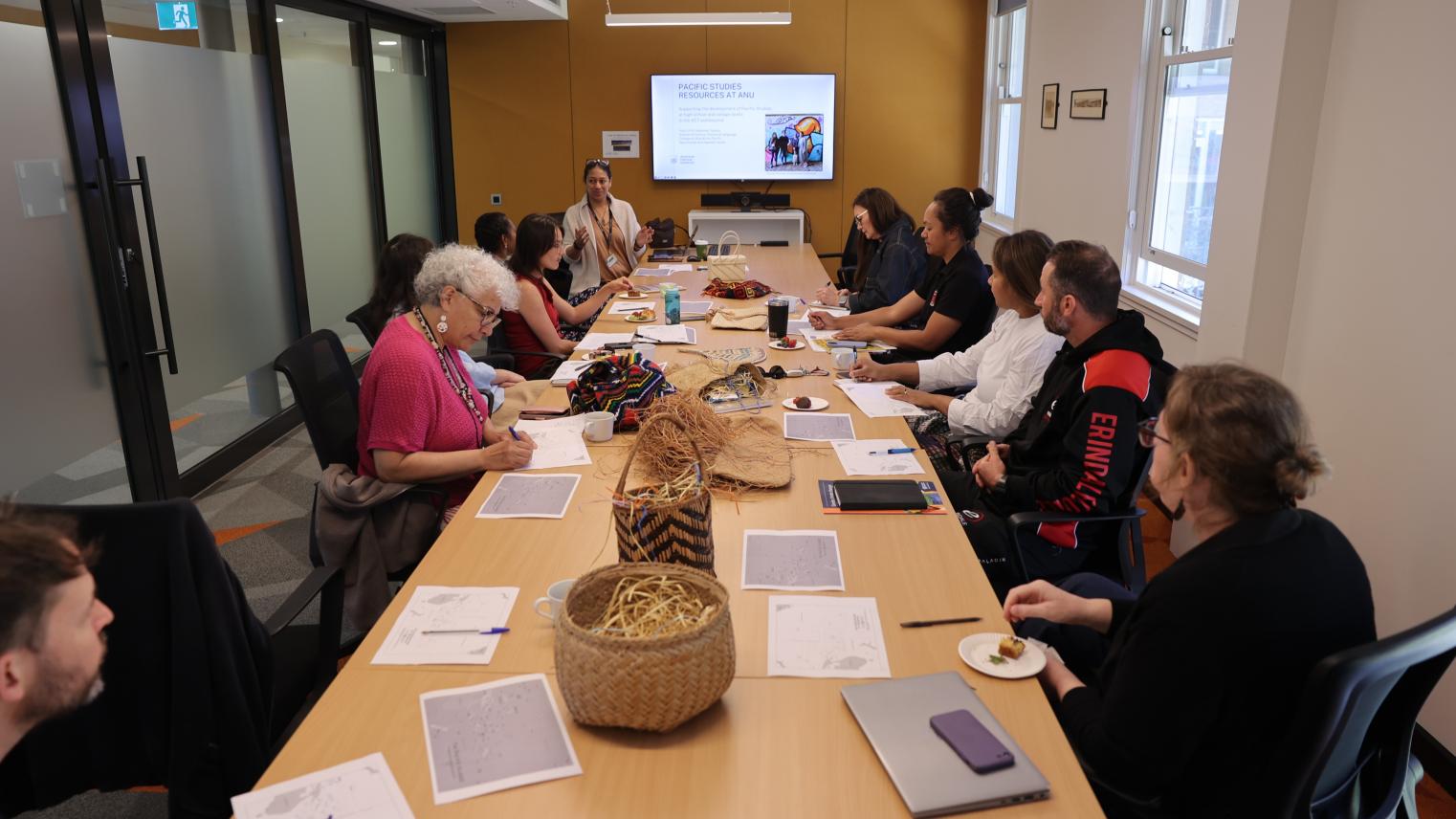
A simple geography activity at The Australian National University (ANU) prompted teachers preparing to introduce Pacific Studies in ACT schools to think about the extraordinary scale and diversity of the region – and how much there is still to learn. From its many island nations and territories to its languages, cultures and histories, the Pacific resists easy generalisations. Understanding it requires curiosity, humility and a willingness to look beyond familiar maps and narratives.
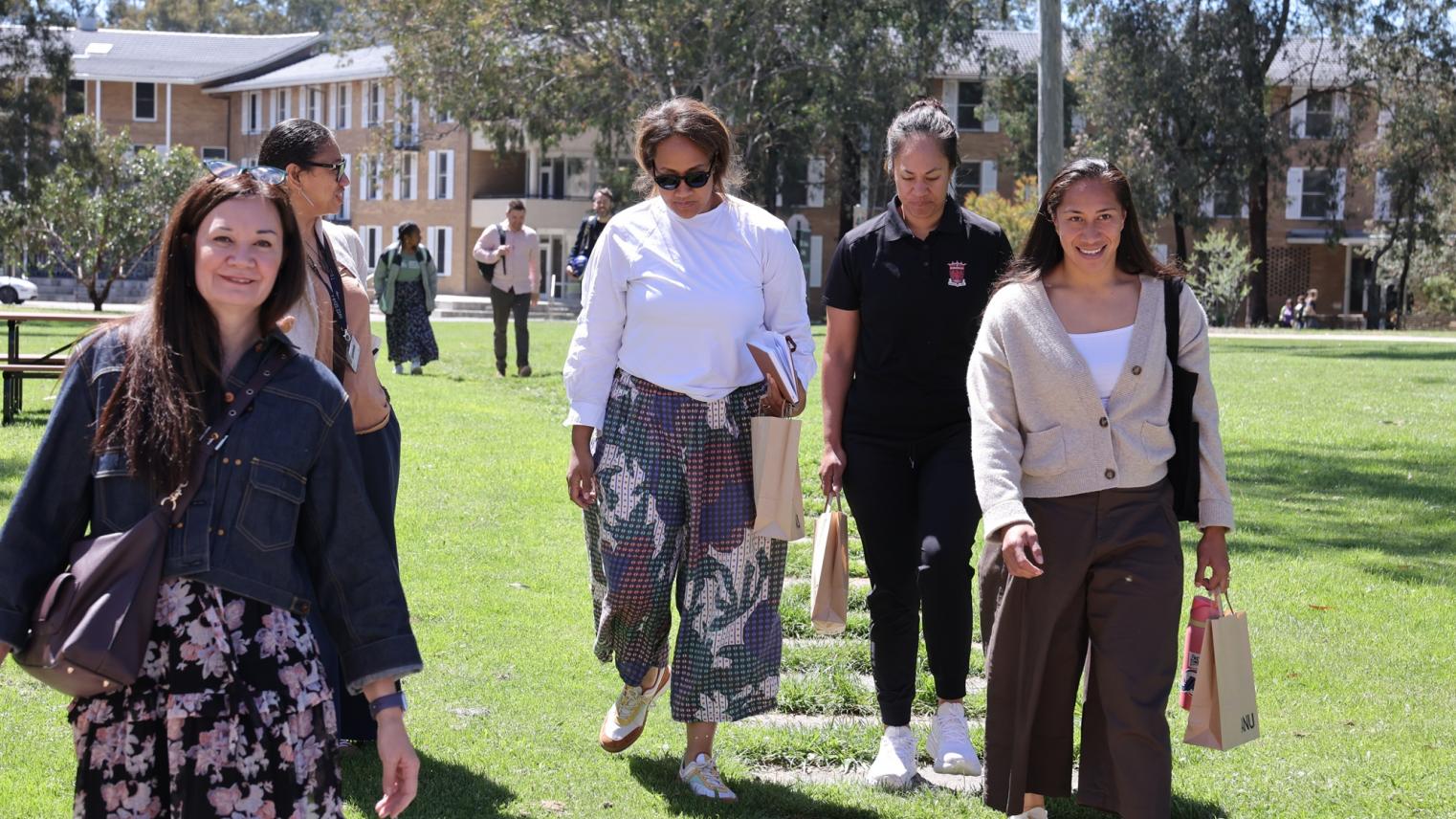
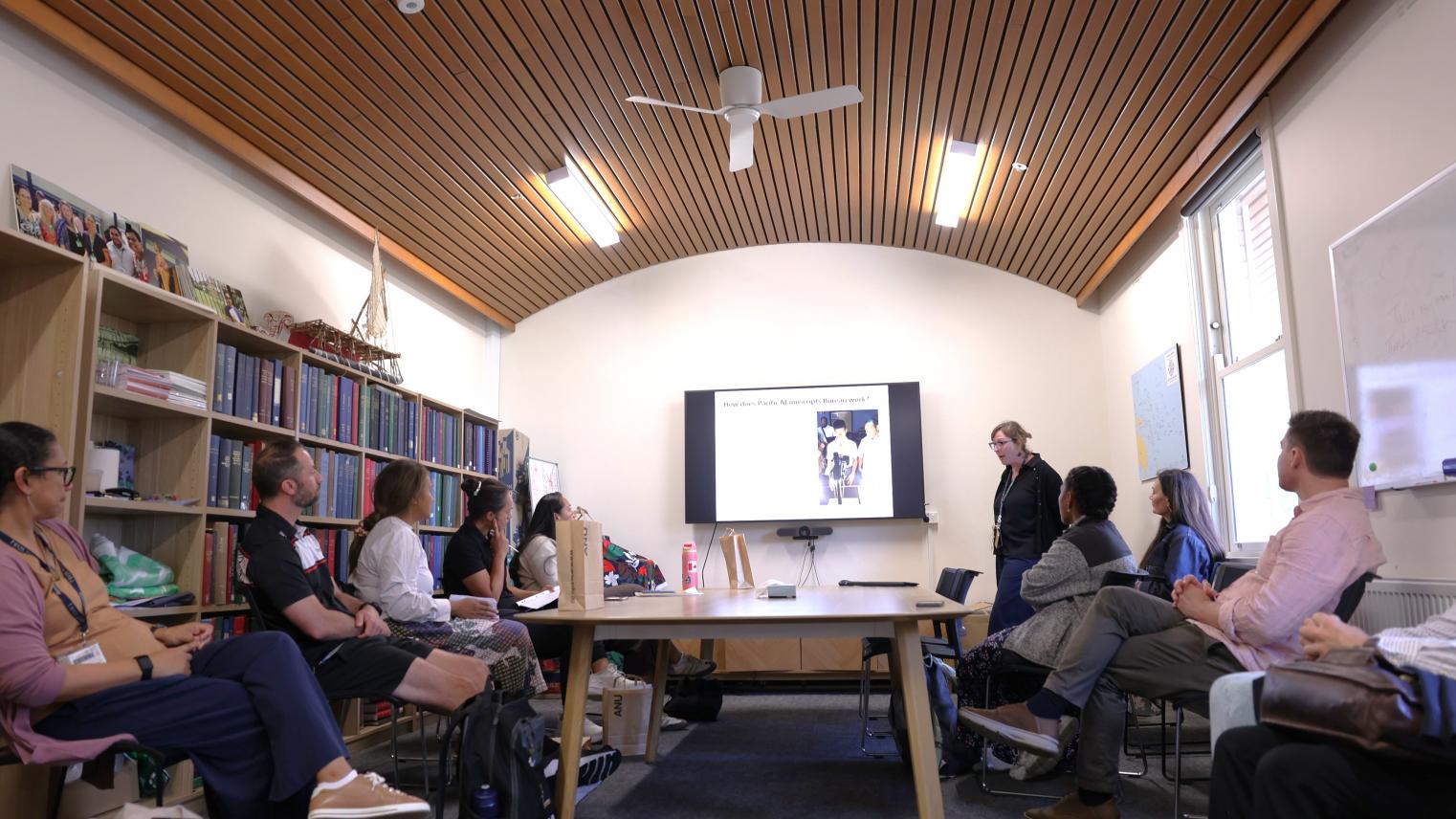
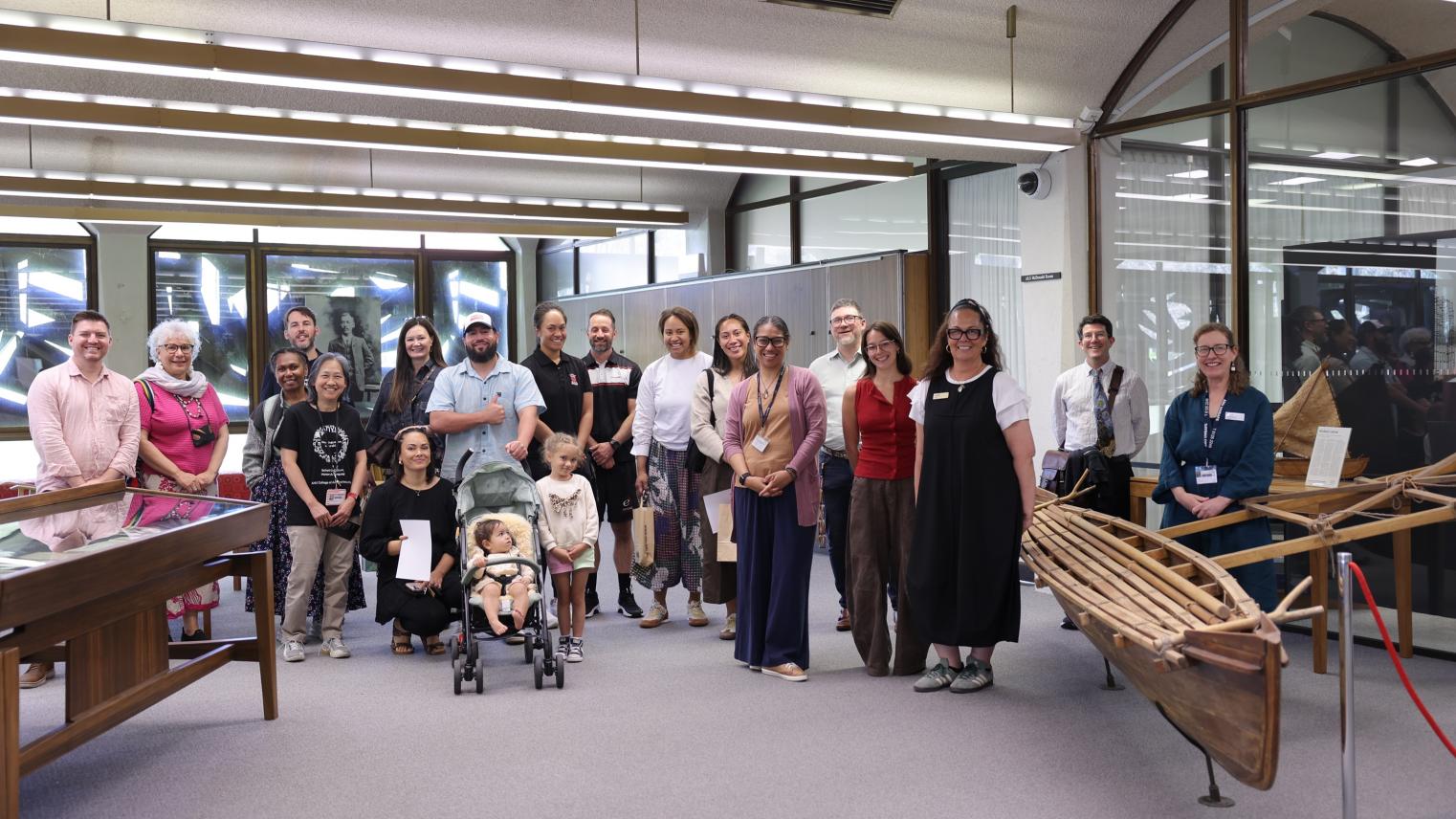
The activity was part of a professional learning visit hosted by Professor Katerina Teaiwa from the ANU School of Culture, History and Language (CHL), within the ANU College of Asia and the Pacific (CAP). The visit brought together teachers from Erindale College, Daramalan College, UC Lake Ginninderra College and members of the Pacific Studies Course Cultural Reference Group, who are preparing for the introduction of Pacific Studies as an ACT senior secondary subject in 2027.
Organised in collaboration with Dr Murray Chisholm from the ACT Board of Senior Secondary Studies, the program connected educators with Pacific Studies academics, students, librarians, archivists and the Pacific Manuscripts Bureau (PAMBU).
For Professor Teaiwa, the opening activity offered an important reminder that even those with experience of the region cannot know everything about the Pacific. Its diversity calls for intellectual humility and an openness to different perspectives and ways of understanding the world.
That approach informed the conversations that followed. Professor Teaiwa and Dr Nayahamui Rooney shared teaching methods and metaphors drawn from Pacific perspectives, including the classroom as a canoe and weaving as a way of thinking about knowledge and learning. Dr Nicholas Hoare from the Coral Bell School shared the many study options for those considering a Bachelors, Major or Minor in Pacific Studies.
The canoe offers a way to think about the classroom as a shared journey, with learning shaped by those travelling together. Weaving, in turn, suggests how different strands of knowledge, experience and relationships can be brought together. Both metaphors invite a view of education that goes beyond the delivery of information, recognising the importance of connection, participation and the knowledge each person brings. Honours students Elentari Berryman and Kira Atkins, along with recent CHL PhD scholar Dr Annie Kwai, shared their own experiences of interdisciplinary Pacific studies.
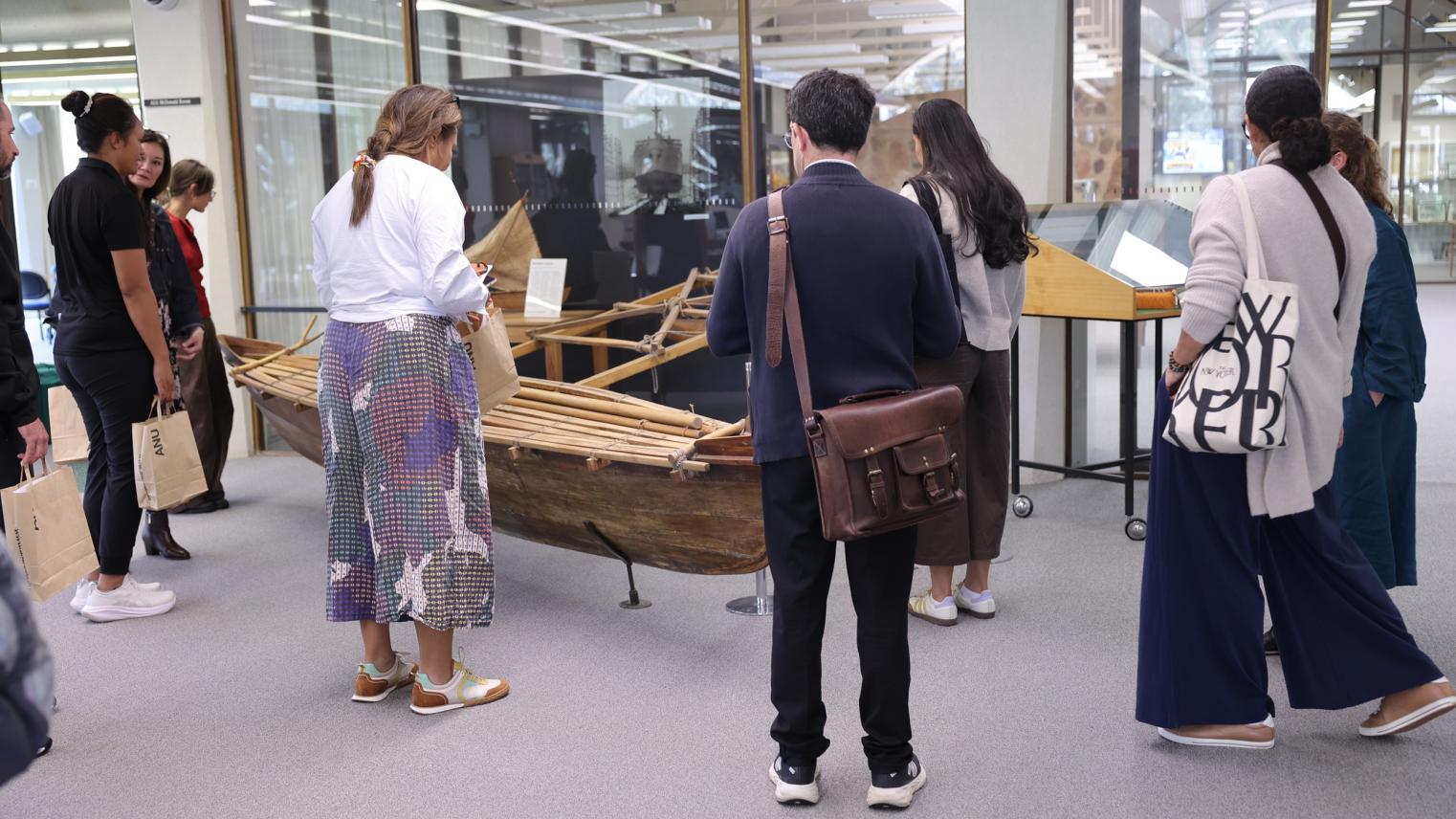
Professor Matt Tomlinson, the Director of CHL, opened the event by welcoming the teachers and sharing insights into the School’s diverse Pacific research and teaching strengths. The visit then moved into the University collections, with staff from Menzies Library and ANU Archives introducing participants to materials that could support classroom learning and further exploration.
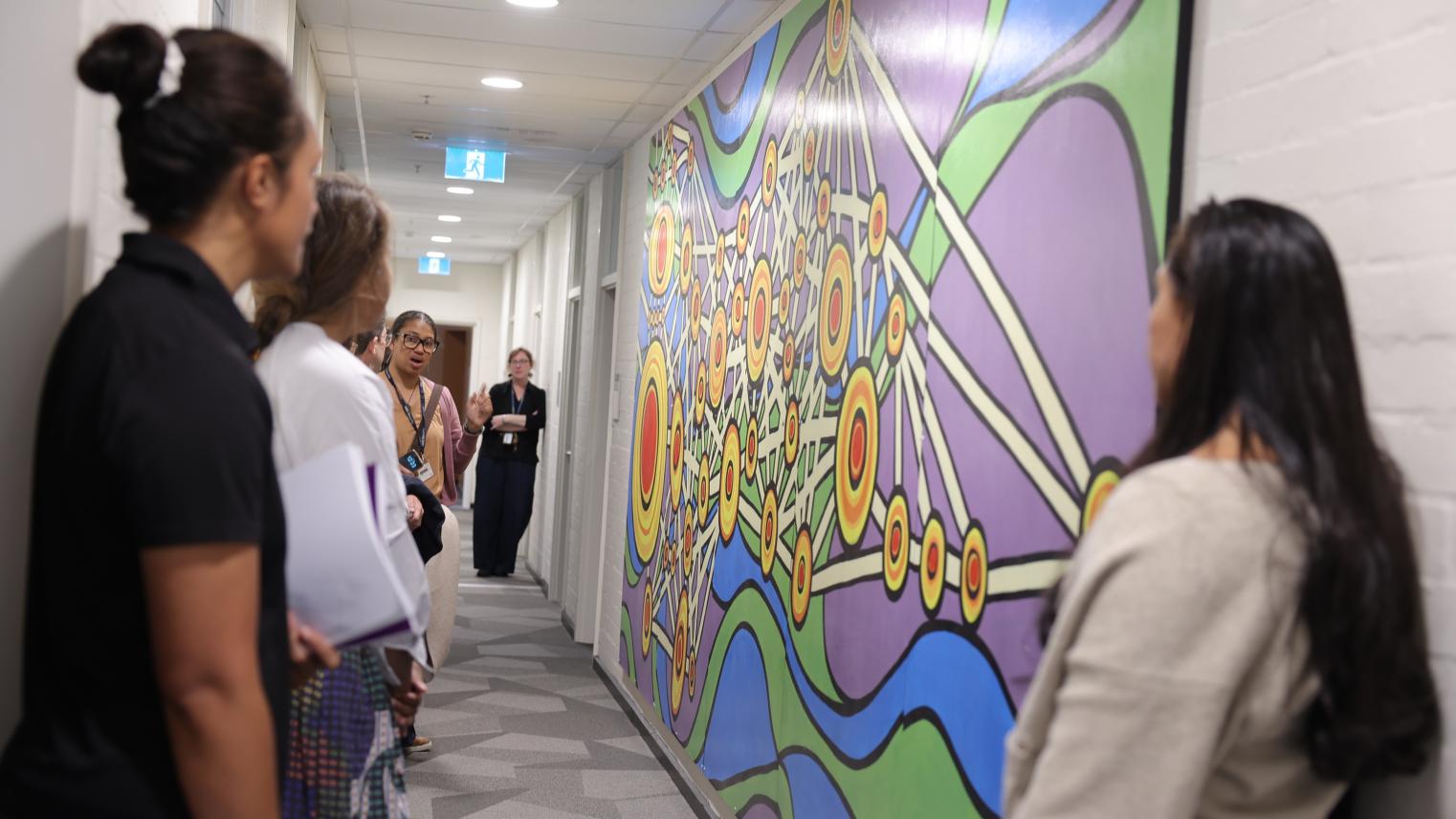
At PAMBU, teachers learned about its work preserving and making accessible documentary heritage from the Pacific. The group also visited the Oceania Room and the Constellation Pasifika mural, before viewing the New Pacific Portraits display and sharing lunch.
These encounters offered practical ways to connect the emerging curriculum with the depth of knowledge held in university collections. Staff introduced teachers to resources ranging from online materials and archival records to primary sources and physical collections and discussed how schools could access them. This is particularly valuable where individual schools may not have the same resources available.
But access to collections is only part of the picture. Professor Teaiwa emphasised that Pacific Studies draws on a substantial intellectual history, including established texts, critical approaches and the work of Pacific thinkers, researchers and artists. Teachers can also draw on their own diaspora communities and Pacific knowledge holders, helping ensure that Pacific values and perspectives are centred in the learning experience.
For Sepi Hawke, House Coordinator at Daramalan College, the visit was an important step in preparing educators for the new subject.
“Launching Pacific Studies is a historic and proud moment for education in the ACT. To ensure we are prepared for effective teaching and learning, we are very grateful for ANU’s support in providing resources and facilitating this process. Thank you to Dr Murray Chisholm for his support of the Pacific Studies course, and to Professor Katerina Teaiwa for the vision she continues to share with us as educators. The connections and support across Canberra’s education network continue to grow, and we are grateful for the guidance and expertise being shared.”
Taking inspiration from the idea of the classroom as a canoe, Sepi and her sister, Elizabeth Churton, recently coordinated a brilliant Pasifika concert and showcase of student performances from many high schools and colleges across the ACT.
As Pacific Studies enters ACT classrooms, the connections between schools, universities, libraries, archives and Pacific communities will be important in shaping how the subject develops. The visit demonstrated the value of bringing different sources of knowledge and experience together – building connections that can enrich teaching and learning and encourage students to encounter the Pacific through its own scholarship, histories, voices and perspectives.
Through CHL and the wider College of Asia and the Pacific, ANU, currently the only university in Australia that offers a Pacific Studies degree, is contributing scholarship, collections and relationships to this emerging area of school education. It is a significant step towards improving literacy of both the island region and Pacific diaspora in Australia.