
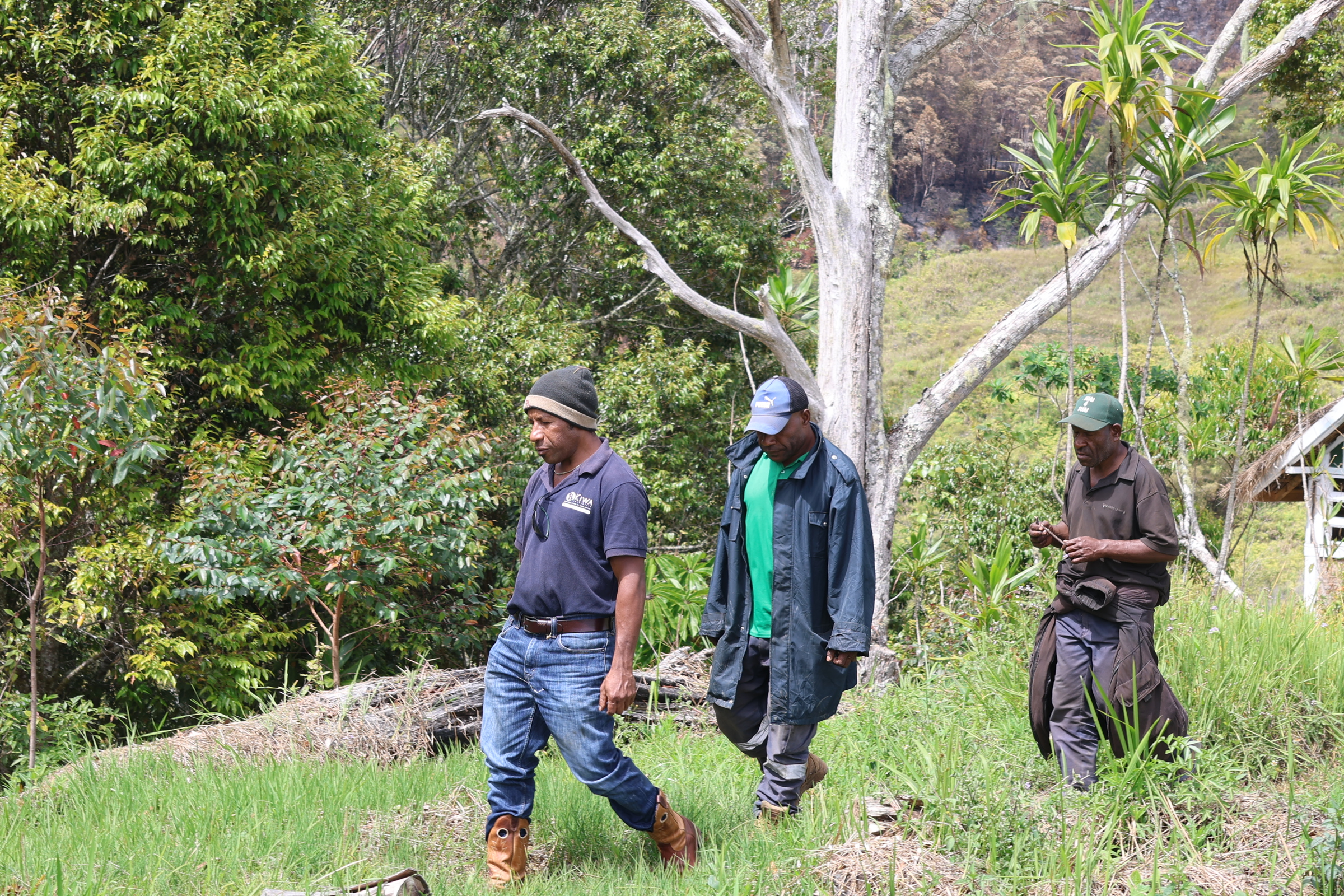
LONG before he founded a community-based conservation initiative, a young Kalale Kaupa was planting trees in his backyard in the central highlands of Papua New Guinea.
In fact, he learnt the importance of planting trees from his parents.
“My mum is a tree planter, and my dad is a nature lover,” he says. “Helping my parents plant trees at our home growing up brought me closer to Mother Nature.”
But the forests and lands in which he was raised have suffered from years of “rapid degradation”. He describes noticing physical signs that the natural ecosystem around him was breaking down — and how planting Indigenous trees helped restore it.
“I saw the decline of native plant species in my village and neighboring communities. I felt the changes the trees were going through…it motivated me to start the Dikasuna initiative.”
The habitat loss is largely due to the rising demand for trees to build housing and grow crops.
Kalale says that since the late 1980s, the forests have dwindled down to a few beneath the valley and along sloped hillsides which are not conducive to agriculture. Meanwhile, grasslands have replaced forested areas and have become a bushfire hazard.
“These are the real challenges and threats facing our environment and affecting people’s livelihoods.”
This is where Project Green Lungs came in.
In 2018, a group of people in the Sipaku clan of the Dika tribe within the Sinasina Yongomugl District of Simbu Province, including Kalale came together to build a native tree nursery and begin planting in degraded areas.
Soon, more people joined this Dika local action group to bolster the effort before the organisation, Dikasuna Nature Conservation Inc. (DNC) was formally registered and recognised as a community-based organisation.
DNC’s mission from the beginning was simple: protect and conserve local biodiversity through sustainable uses of natural resources and indigenous tree habitat management.
Practically, that meant restoring degraded lands with native trees and plants that hold cultural connections and increasing community awareness. The goal was to train volunteers in nursery management to replicate Project Green Lungs across all the villages in the Dika community.
At some point, DNC recognised that preserving more forests and extending reforestation efforts would require wider support – not only from different communities and families, but also institutional partners.
The Kiwa Initiative is a multi-donor grants program that works to strengthen and support the resilience of Pacific Island communities and ecosystems through Nature-based Solutions (NbS). The program is funded by the European Union, Agence Française de Développement, Global Affairs Canada, Australian Government Department of Foreign Affairs and Trade (DFAT) and New Zealand Ministry of Foreign Affairs and Trade (MFAT). Kiwa has partnered with the Pacific Community (SPC), the Secretariat of the Pacific Regional Environment Programme (SPREP), and the International Union for Conservation of Nature (IUCN) Oceania Regional Office to support, implement and manage projects.
When the Kiwa Initiative partnered with DNC to implement an NbS project, DNC hoped it would lead to more positive environmental changes. Since the project began in 2025, their conservation work has reached new heights.
Under this local project, DNC is working together with communities across six sites to establish and maintain a conservation area spanning 130 hectares of native plant habitat and reforest 100 hectares with native plant species. DNC is also increasing awareness on climate change adaptation and resilience, reaching members of local villages, particularly women and other marginalised groups. Kalale leads the on-the-ground implementation of project activities.
“Community awareness is very important because of the threat of small-scale logging and fast disappearance of some of our unique native plants,” Kalale explains.
“Many people need clear understanding of climate change and importance of land use management and wise use of forest and natural resources. We also need the community’s trust to work together to protect our remaining forest. But that is a challenge. Despite awareness, we still have bush fires and youths taking interest in other things besides conservation.”
The project tries to address these gaps, mobilising community and tribal leaders, clan groups, landowning families and church groups to help manage the nursery and participate in tree planting and reforestation of degraded areas. Women are given opportunities to play leading roles in project activities, including overseeing nursery management and transplanting.
Kalale explains that they are also integrating beekeeping into their approach to conservation and climate smart livelihoods.
“We get honey into our garden of native plants to help pollination and to propagate these habitats for sustainability of the Dikasuna project going forward.”
Signboards have been erected in preservation and reforestation sites for the first time.So far, the community has responded positively to the project. For Kalale, this demonstrates what is possible when people come together to contribute to a shared cause.
“We believe in local action, and we started our work with this conviction,” he says.
The words, ‘We believe in local action’ have become a bit of a slogan for DNC. However, it represents more than just a catchy phrase.
It signals a way of life for a community inspired and committed to preserving their local resources, restoring the natural landscape and building sustainable livelihoods — not just for themselves but for future generations.
“I want other people in the surrounding communities to see the sanctuary of native plants habitat we have created as a model to replicate in their own backyard,” Kalale says.
“I want them to build a garden of native plants and conserve our cultural and natural heritage. I want my communities to become climate resilient communities.”


