 2024 – 2026
 2020 – 2023
 2017 – 2019
 Catalogue
AUSTRALIAN opposition figures and regional analysts have welcomed reports that Prime Minister Matthew Wale will allow Honiara’s 2022 security pact with Beijing to lapse in lieu of a comprehensive bilateral treaty with Canberra.
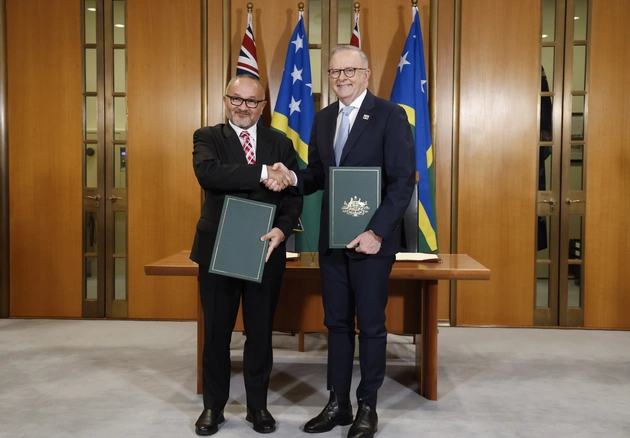
This comes as Solomon Islands Prime Minister Matthew Wale is set to sign a comprehensive bilateral treaty with Australian Prime Minister Anthony Albanese in Canberra, amid reports that Honiara intends to scrap its controversial 2022 security pact with China.
The anticipated agreement is a major geopolitical realignment in the Pacific, that come in the wake of similar pacts Canberra inked with Fiji and Vanuatu earlier in 2026. Originally signed in 2022, the Beijing accord allowed Chinese police deployments to restore order and naval vessel rotations through Solomon Islands ports.
Confirming the Beijing deal would end, Australian Opposition Leader Angus Taylor welcomed Honiara’s decision to prioritise Canberra on regional security, pledging that a Coalition government would invest closely with Pacific leaders to prevent competing security arrangements. Opposition sovereign capability spokesman Andrew Hastie praised Wale as a “courageous visionary,” telling ABC Radio National that the Solomon Islands leader was acting in both his nation’s best interests and those of the free world.
Analysts Weigh Geopolitical Shift
Regional observers described the move as a striking departure from traditional Pacific diplomacy, where island states have largely avoided choosing sides between major powers. Lowy Institute Pacific Islands director Oliver Nobetau said allowing the China agreement to lapse in April 2027 would be “completely unexpected.”
“He is not hedging in the same way – he’s actively picking a side,” Nobetau noted ahead of the Canberra talks. To secure such a shift from a nation of roughly 800,000 people where Beijing has established a firm foothold, Nobetau suggested Australia would have needed to offer substantial incentives, potentially spanning free education, economic stimulus, resource and export support, or assistance with El Niño impacts and energy security.
Operationalising the Pact
The new treaty builds upon the 2017 bilateral security agreement, which enables rapid Australian deployments to Solomon Islands when requested. However, Nobetau cautioned that the pact’s real-world impact would depend on practical execution rather than diplomatic symbolism, particularly given Solomon Islands lacks a standing military.
“It’s not about just signing all these big agreements – they actually have to, on the ground, be able to operationalise,” he warned.