PEACE in the Pacific has always been built through communication.
Here, peace is built through talanoa, through church gatherings, through storytelling and song, through women within our communities, and through young people organising collective action.
Communication is a tool within a relational definition of peace.
Today, information and communication technologies (ICT) play a strong hand in shaping how Pacific peoples access information, participate in public life, and connect across our vast ocean continent.
They are also reshaping how Pacific peoples experience security and peace.
As the Ocean of Peace Declaration is being implemented, we have to ask what it means:
- To a young person who cannot access reliable information during a climate-related disaster?
- To a woman experiencing violence in her community and online?
- To a person with a disability excluded from digital spaces because information is inaccessible?
- Or to communities where colonial and nuclear legacies, and struggles for self-determination continue to shape their understanding of security?
The Ocean of Peace Declaration rightly reaffirms the sovereign equality of Pacific nations and recognises the importance of dialogue, mediation, conflict prevention and the responsible use of technology.
It acknowledges the contributions of Indigenous Peoples, local communities, civil society, faith-based organisations, women, youth, persons with disabilities and other historically marginalised groups in sustaining peace across the Blue Pacific.
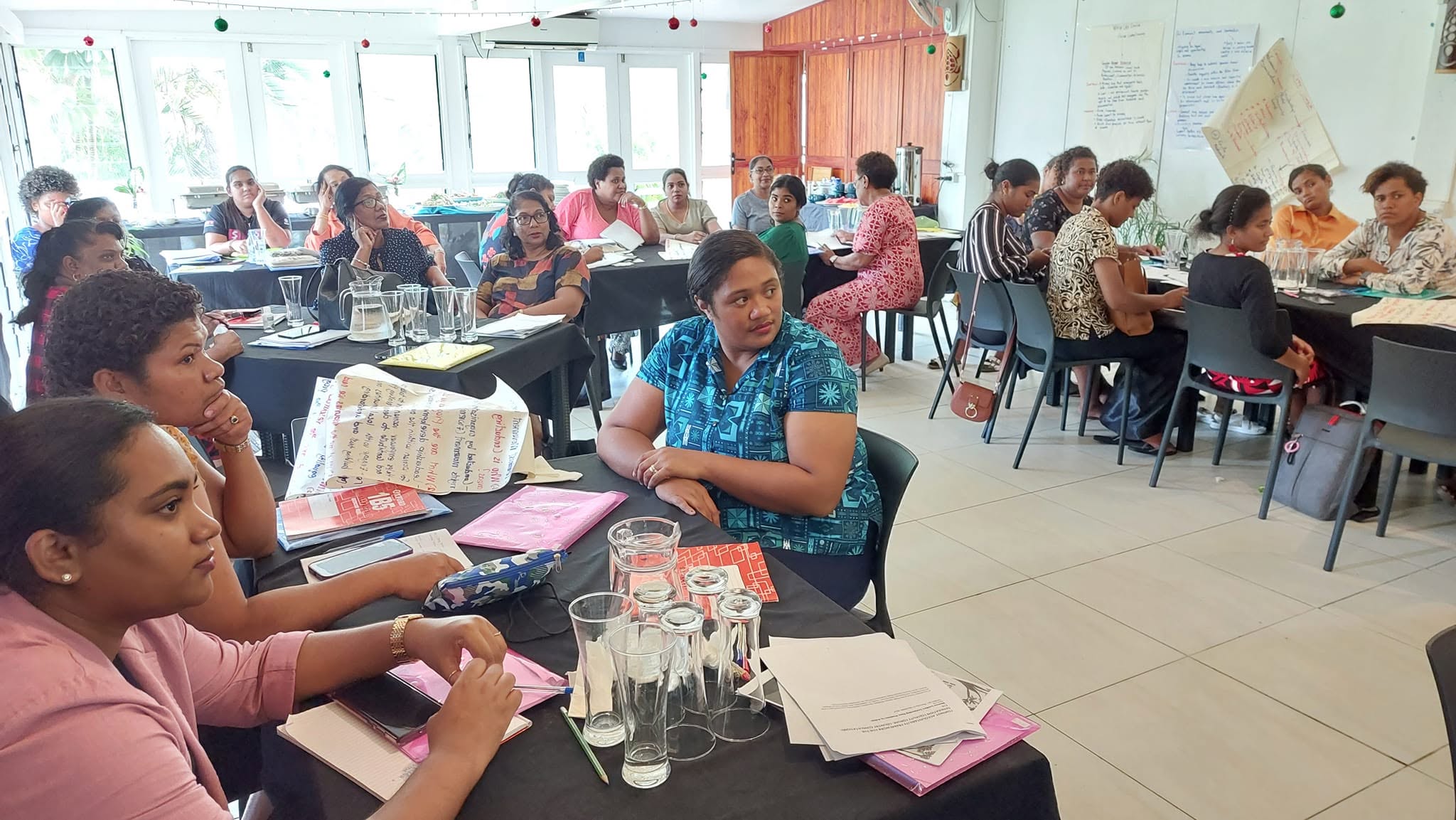
This is why the Pacific Women Mediators Network Programme (PWMN) Associates, through the Pacific Conference of Churches (PCC), are undertaking research exploring the role of communication, media and ICTs as tools for peacebuilding.
The research builds on baseline work completed in 2025 with young people from the Northern Pacific, where they expressed their understandings of peace and human security through art.
It was a reminder that, above all, peace is expressed through lived experience, and we must listen to forms of communication that allow communities to express their realities in ways that feel safe and authentic.
The next phase of the research expands this conversation to the PCC’s Regional Ecumenical Youth Council (REYC), their youth constituencies, church leaders and women church leaders.
Because the PCC serves communities across the region rather than a single national constituency, there is an opportunity to capture diverse understandings of peace, security and communication across the Blue Pacific.
It is also an opportunity for cross learning between young people and developing solutions that draw from shared experiences.
For communities in the Republic of the Marshall Islands, Kiribati and Maʻohi Nui, understandings of security are inseparable from nuclear legacies and ongoing calls for nuclear justice.
In Maʻohi Nui, Kanaky and West Papua, conversations about peace cannot be separated from decolonisation and struggles for political autonomy.
The role of communication itself is political:
- During the 2024 civil unrest in Kanaky, restrictions on communication and social media had direct impacts on young people and how they accessed information. In West Papua, communication and media remain central to challenging narratives imposed upon communities while advocating for self-determination and human rights.
- Overall, many young people are navigating online environments shaped by algorithms they do not fully understand. Misinformation spreads rapidly during disasters and periods of political tension. Online violence disproportionately affects women and girls. Persons with disabilities still encounter barriers to accessible communication and information. Rural and maritime communities continue to face connectivity challenges. Above all, affordability determines who can participate in digital spaces.
If some communities cannot access information during emergencies, cannot participate in digital spaces, or cannot engage in conversations shaping their futures, then they are excluded from processes that sustain peace.
This is why media and ICT literacy must also be understood as peacebuilding, as a means to support participation, protection and conflict prevention.
Community media can act as an early warning system, aiding in disaster risk reduction. Young people can use media and technology to conduct research, document experiences, and participate in peacebuilding efforts.
The Ocean of Peace Declaration acknowledges the importance of inclusive and people-centred peacebuilding. Pacific Forum Leaders now have the opportunity to ensure that implementation reflects those commitments.
This means recognising communication and ICTs as peacebuilding infrastructure rather than only a security infrastructure, and investment in digital inclusion.
It means ensuring that women, young people, persons with disabilities and communities affected by colonial and nuclear legacies, and struggles for self-determination are recognised as leaders in shaping regional peace and security.
If the Ocean of Peace is to remain rooted in Pacific priorities, it must be guided by the everyday experiences of Pacific peoples.
We cannot have an Ocean of Peace unless our people feel informed, heard, connected, protected and able to participate in shaping their futures.