 2024 – 2026
 2020 – 2023
 2017 – 2019
 Catalogue
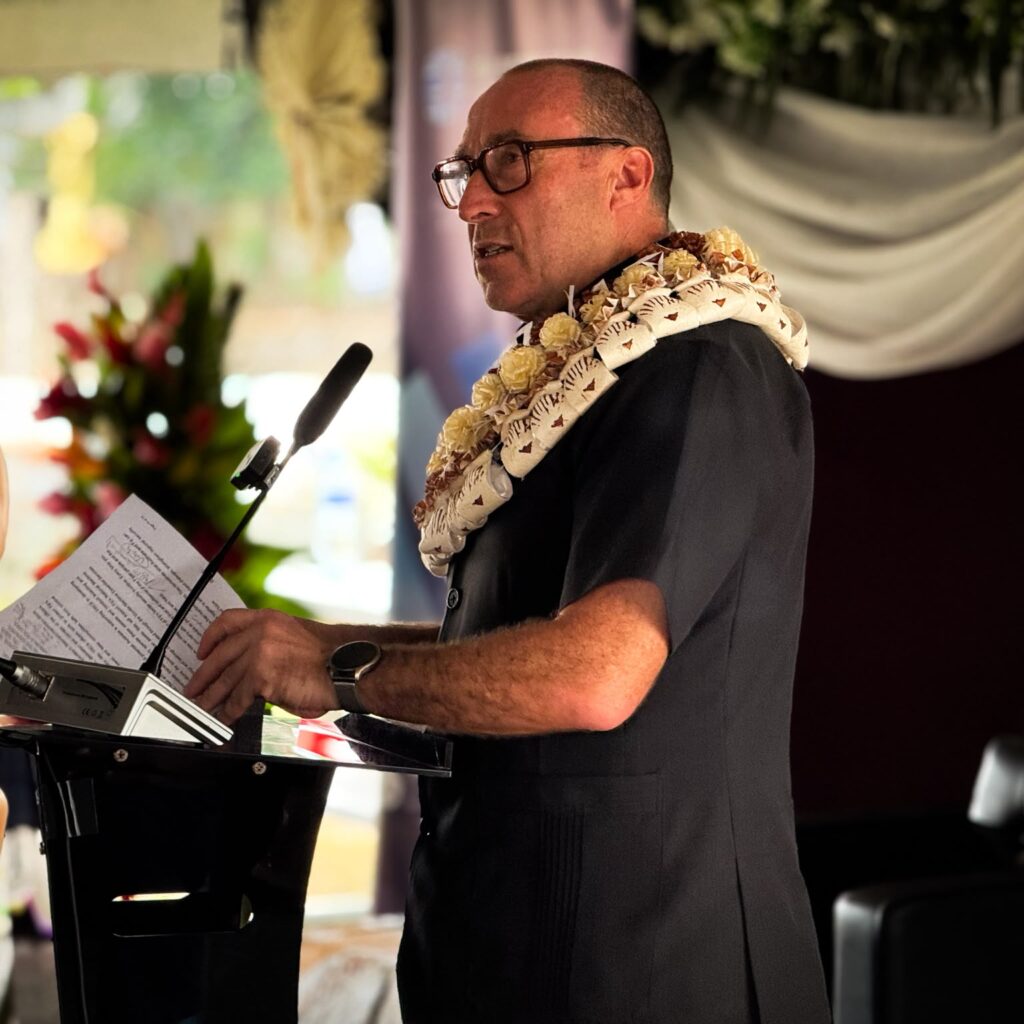
AUSTRALIA reaffirmed its commitment to advancing Pacific climate priorities despite the outcome of COP31 falling short of regional expectations, Australian High Commissioner to Fiji Peter Roberts said.
Speaking to the media, Roberts acknowledged the disappointment surrounding the climate negotiations but maintained that Australia remained committed to amplifying Pacific voices on the international stage.
He said Australia had worked closely with Fiji and Tuvalu to host the pre-COP meeting in Fiji with the objective of ensuring Pacific concerns were heard during global climate negotiations.
“The Pacific is the most impacted and not always the most heard,” Roberts said.
“And look, obviously the COP didn’t have a decision that people hoped for, but the concept and the commitment and the idea remains the same.”
Roberts said Australia would continue working with its Pacific partners through international climate negotiations and practical cooperation to address the impacts of climate change.
He highlighted the Fiji Climate Adaptation Programme as an example of Australia’s ongoing commitment to supporting vulnerable communities.
With Fiji facing drought conditions associated with El Niño, Roberts said Australia was exploring ways to redirect existing climate adaptation initiatives to address immediate water shortages.
He said Australian officials had met with the Fiji Government following its declaration of a state of disaster over the drought.
Drawing on Australia’s own experience with droughts and water restrictions, Roberts said his country was keen to share its expertise and work alongside Fiji in addressing water security challenges.
He said further discussions with the Government were expected the following week after a coordination meeting.
Roberts maintained that Australia’s commitment to the Pacific extended beyond international climate negotiations, with practical adaptation measures remaining an important part of its regional engagement.
He emphasised the importance of ensuring Pacific voices continued to be represented in global climate discussions.