
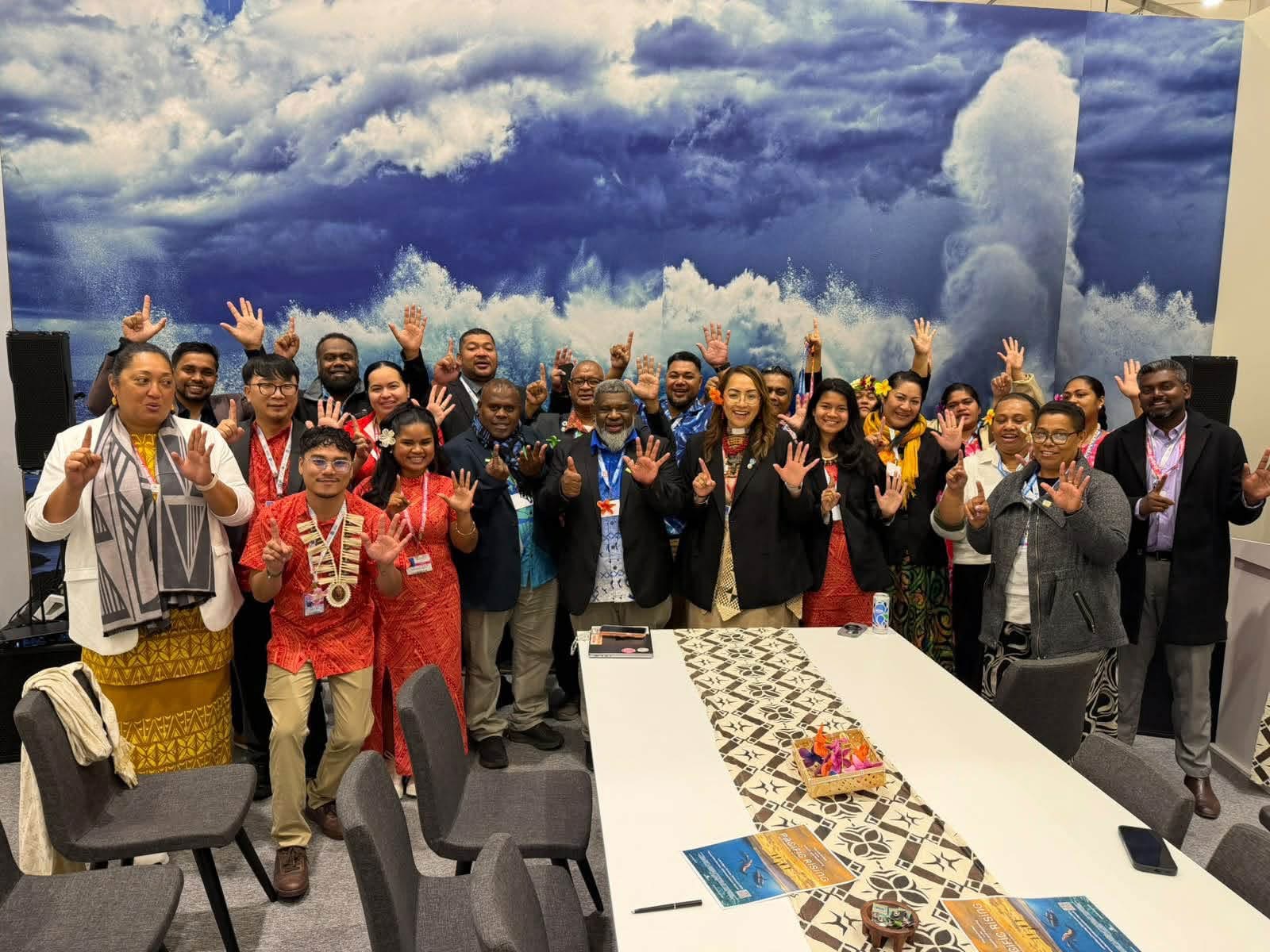
AMID the crowded corridors, negotiating rooms and competing political positions at COP31, a different presence is around, the church.
It is President of the Uniting Church in Australia, Reverend Charissa Suli, first time being at the UN climate conference (COP) and her presence in this space is about more than observing negotiations.
Speaking outside the Moana Pavillion, she shares that faith leaders had an important responsibility to accompany Pacific negotiators as they navigate difficult discussions over the future of their region.
“It is about pastoral care that we can offer, wee have our pacific diplomats, leaders whoa re in the thick of negotiations right now and to bring our people back to our identity as people of faith, as a church or faither leaders, we have a responsibility to walk alongside, to be present, to pray for our leaders who are doing this important work for us,” Suli said.
For Sui, whose own Pacific identity shapes how she approaches climate justice, the church’s role is also about keeping communities connected to their values and responsibilities at a time when the future of the Pacific is being debated on the global stage.
She said political negotiations could often become consumed by agendas, technical language, data and statistics, making it important for faith leaders to bring the human experience back into the conversation.
“I believe that we have the opportunity to remind our government negotiators, our political leaders, that while they are wrestling over negotiations and agendas and data and statistics, the church will always remind them of the human face and the human life that is behind that data, behind that science,” she said.
It is a role she believes extends beyond the conference itself, with churches also able to amplify the voices of Pacific communities and advocate for climate justice within their own societies.
As her first time experiencing COP she describes it as busy and overwhelming, but one that has strengthened her understanding of the church’s place in international climate discussions.
“The experience had made the connection between faith, leadership and climate advocacy more meaningful,” she said.
Faith and the responsibility to care for creation
For Sui, the church’s involvement in climate action is grounded in its understanding of creation and humanity’s responsibility to care for it.
She said environmental protection should not be separated from Christian faith, pointing to the biblical account of creation and the responsibility entrusted to humanity.
“From the beginning of time, God has always cared for creation. God created heaven and earth, and it’s important for us to recognise that if we believe our faith is connected to God, it is also connected to God’s creation, which is land and ocean, water and skies,” she said.
She pointed to biblical references to the groaning of creation, saying that “the climate crisis calls for a response that recognises both the suffering of people and the natural world”.
For Pacific communities, where land, ocean, culture and identity are deeply interconnected, she said caring for creation is also about protecting the foundations of community life.
Sui believes churches have a responsibility not only to speak about these concerns but to demonstrate them through their actions, leadership and advocacy.
A message of hope for the Pacific
Beyond the negotiations, Sui had a message for Pacific communities following COP31 from home.
She shares that while the work taking place inside the conference could often seem distant from everyday life, Pacific leaders and negotiators remained conscious of the people and communities they represented.
“What I am seeing firsthand here for our people at home, I am seeing your leaders, our leaders who are working tirelessly behind the scenes,” she said.
She urges Pacific communities to continue supporting their representatives.
“Pray for our Moana Pavilion, for the people who have gathered here,” she said. “Pray for the world leaders that they will see the justice that we are asking for, and that they will hear our voices and hear the stories of our Pacific Islander peoples.”
As COP31 continues, Sui’s message offers another perspective on Pacific climate advocacy: that alongside diplomacy, science and finance, faith, identity and the responsibility to care for one another and the natural world remain central to the region’s call for climate justice.

