
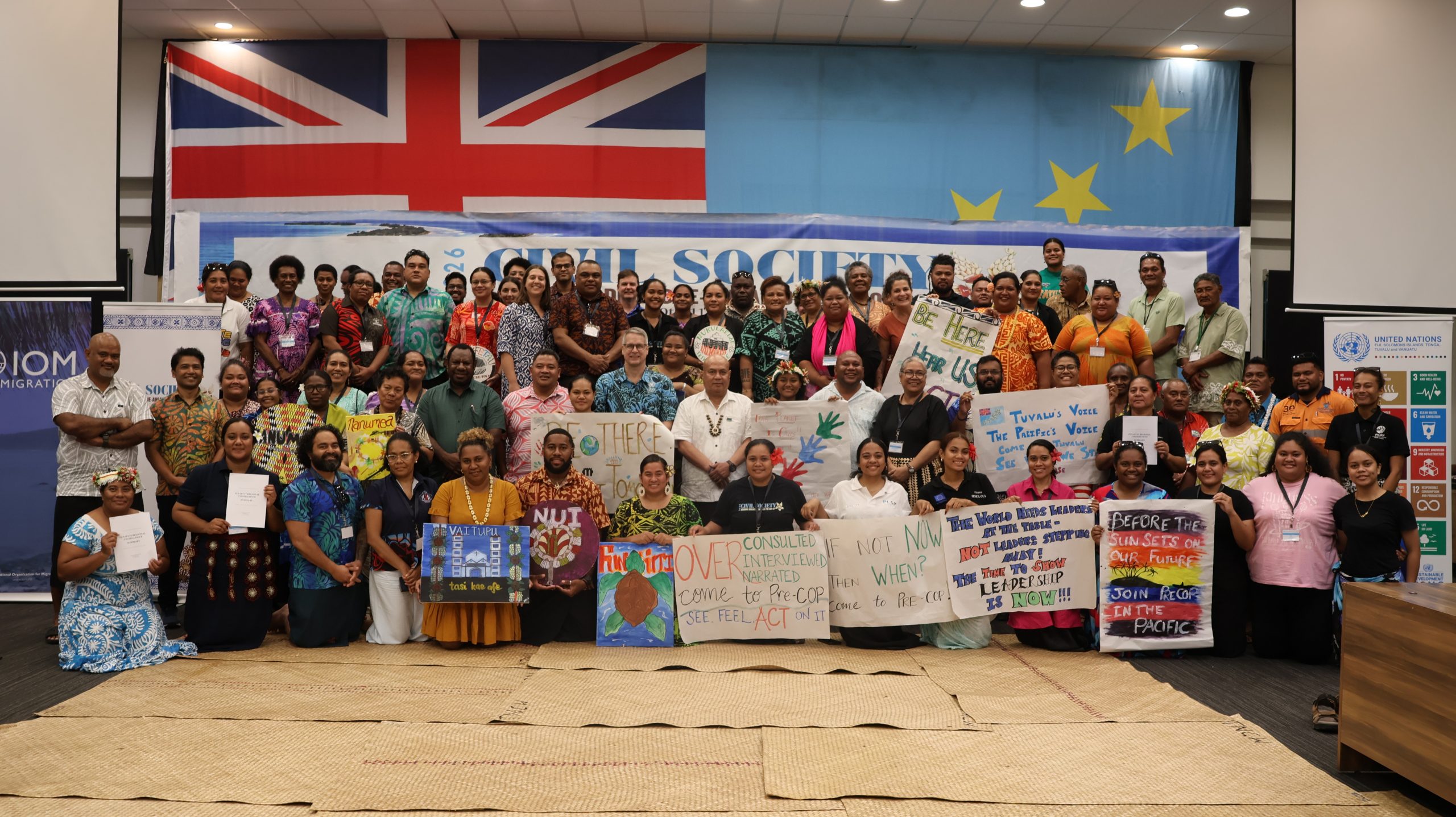
PACIFIC climate priorities include an immediate phase-out of coal, oil and gas, alongside stronger accountability from major emitting countries to keep the 1.5°C temperature limit within reach.
The call forms part of the Funafuti Call for Climate Justice, an outcome of the Civil Society Regional Dialogue for Pacific Voices Ahead of Pre-COP31 and COP31, held in Tuvalu on September 10–11, 2026.
The outcome statement describes 1.5°C as a non-negotiable survival threshold for Pacific peoples, cultures, health, livelihoods, sovereignty and future generations.
It calls for stronger accountability measures to ensure major emitting countries deliver climate action consistent with the temperature target and meet their legal obligations.
It also urges states to stop fossil fuel exploration, licensing and expansion, and end fossil fuel subsidies.
The statement says developed countries must lead the managed decline of fossil fuels first and fastest, in line with their responsibilities and capabilities, while all states must follow.
It rejects what it calls false solutions, including carbon capture and storage, nuclear energy, offsetting, geoengineering, and managed transition pathways when used as substitutes for reducing fossil fuel production and consumption.
Pacific leaders are urged to endorse the Tassiriki Call for a Fossil Fuel Free Pacific and demand grant-based finance and technology transfer from development partners to help the region reduce its dependence on imported fossil fuels.
The statement says this year’s energy crisis showed that no Pacific state can end this dependence alone.
It calls for renewable and sustainable energy systems that reflect Pacific development priorities, including the needs of highland communities, outer islands and maritime populations.
However, it warns that energy development must not come at the expense of climate adaptation, land or food security, or reproduce extractive practices.
It also calls for climate transitions to be just, equitable, inclusive and gender-responsive, with safeguards for women, girls, children, youth, older people, persons with disabilities, migrants, Indigenous Peoples and local communities.
The statement links plastic pollution to fossil fuel production and calls for action across the entire plastics life cycle, from raw material extraction and production to the remediation of existing marine pollution.
It further emphasises the importance of Indigenous knowledge systems, scientific evidence, traditional practices and lived experiences in guiding climate decisions, adaptation and resilience-building.
Meaningful participation by civil society and communities must be embedded in climate governance, policy development, financing, implementation and accountability at national, regional and international levels. The statement calls on Pacific leaders and international partners to carry these priorities through Pre-COP31 and COP31 and beyond.


