
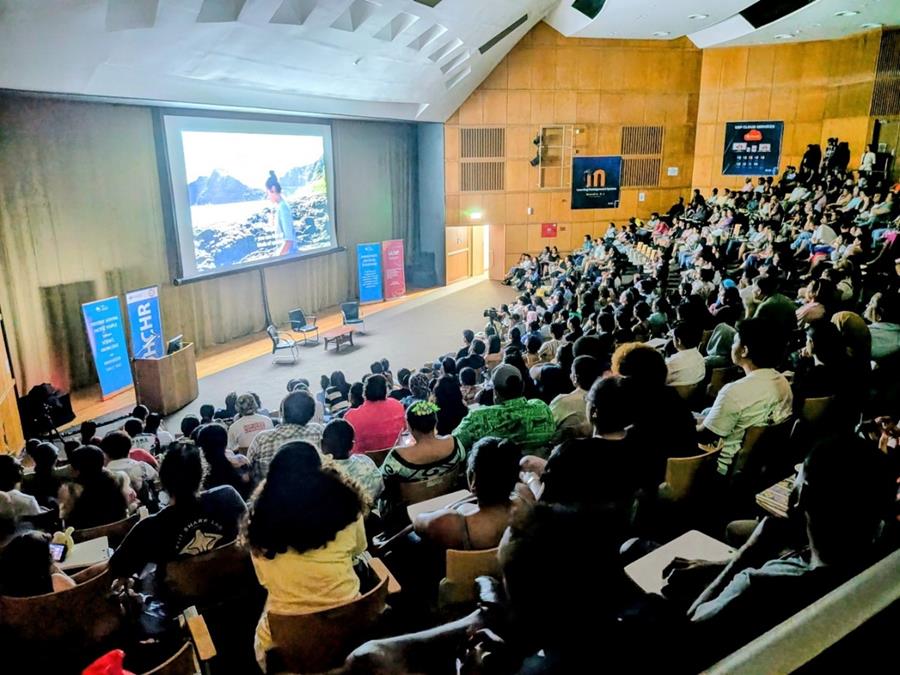
Over 2,500 people across the Pacific have engaged with topics that are often misunderstood, through film and talanoa, as a part of the 6th Pacific Human Rights Film Festival.
Recent years have witnessed a global backsliding in human rights and global norms. When multilateralism is under strain and global ambition on international cooperation is being eroded, conversations on human rights, gender equality and environmental stewardship are more important than ever. The Pacific is not immune from these trends, and Pacific Island communities face human rights challenges every day.
This annual festival brings these issues to the big screen, providing space for Pacific people to engage with these stories and deepen their understanding of human rights issues in our region and the world beyond. Knowing one’s rights is the first step towards acting positively to protect human rights and foster equality.
This year, the theme ‘Light in the Darkness’ covered wide-ranging themes and post-colonial approaches, with a strong emphasis on women-led and directed films, motherhood and empowering younger generations in the Pacific.
This year’s Festival, which started in early September and runs until the end of the month, provided free and exclusive film screenings in Suva, Nadi, Lautoka and Labasa in Fiji, as well as around the Pacific region, in Australia, Cook Islands, Federated States of Micronesia, Hawai’i, Kiribati, Marshall Islands, Nauru, New Caledonia, Saipan, Samoa, Solomon Islands, Tonga, and Vanuatu.
In Fiji, the Festival ran a series of pre-events in September on the topic of artistic intellectual property rights. This was followed by the official programme for Suva from 3 – 24 October with film screenings and Talanoas held at Damodar City Cinema and University of the South Pacific. The Fiji public screenings alone were attended by over 1,500 members of the public.
The festival provided Pacific and Fijian exclusives and premieres for films – both documentary and narrative – that have swept awards and plaudits from festivals around the world, from the Emmys to European film festivals like LUX, Cannes, Gaudi, and Berlin. The Pacific-made movies showcased at the Festival have dominated FIFO Tahiti, Hawai’i International Film Festival, and Doc Edge NZ. The Pacific Human Rights Film Festival screenings provided many Pacific Island countries their first opportunity to see these incredible cinematic stories for free. The Festival also featured new talent with the Fijian public premiere of An Unofficial Colonial History of the Feejee Islands AKA VITI.
The post-screening discussions provided a safe space for audiences to discuss these important issues with experts, people in the region directly affected by some of the topics highlighted, and those involved at every level of the filmmaking process from the film directors to the film subjects.
This year, the Pacific Human Rights Film Festival aimed to make most events as inclusive and accessible as possible. For persons who are deaf or hard of hearing, most films screened in Fiji had subtitles available, and many discussions and other events include sign language interpretation.
Miles Young, Director of the Human Rights and Social Development division, SPC, said: “The Festival continues to grow and attract people from all walks of life, including from outside the human rights and film making spaces. Over the years, we’ve seen the conversations that take place after the films gain in nuance and depth. Over time, people who come to the Festival are more comfortable discussing difficult issues in that space, and have broadened our understanding of what human rights mean for us in the Pacific. And this is really the goal of the festival – to raise awareness of human rights issues and create safe spaces for discussions”.
Milla Vaha, Senior Lecturer of Politics and International Affairs, USP, said “The festival has moved human rights learning outside of the classroom, expanding academic knowledge by building compassion to the victims of human wrongs, and acknowledging the work of human rights defenders. I have been particularly happy that we have been able to bring the festival to different USP campuses in the region and that the number of participating campuses has grown year after year. I wish to express my gratitude to my colleagues and students on those campuses for helping to make these regional screenings happen.”
Heike Alefsen, Regional Representative, OHCHR Pacific Regional Office said: “This Festival has always sought to highlight stories that link human rights to lived realities in the Pacific and beyond, and this year is no exception. It would be easy to feel that the darkness is winning, but this shines a ‘light in the darkness’ for us and this could not come at a better moment to reaffirm the enduring values of human rights.”
H.E. Barbara Plinkert, Ambassador of the European Union to the Pacific, said: “Cinema serves as a significant platform for highlighting complex social realities and fostering community dialogue. We are proud to stand alongside our Pacific partners for this sixth edition of the festival. The European Union supports these spaces because we firmly believe that a society’s progress is measured by how safely, and how openly, its people can tell their own stories.”
This year, the Pacific Community (SPC) partnered with the University of the South Pacific (USP) and the Pacific UN Human Rights Office (UNOHCHR), with support from the Delegation of the European Union to the Pacific, together with Ambassade de France a Fidji, Kiribati, Nauru, Tonga et Tuvalu (the French Embassy in Fiji, Kiribati, Nauru, Tonga and Tuvalu), the British High Commission in Fiji, Embassy of Spain in Fiji, Oceania Centre for Arts, Culture and Pacific Studies and Centre for Sustainable Futures.
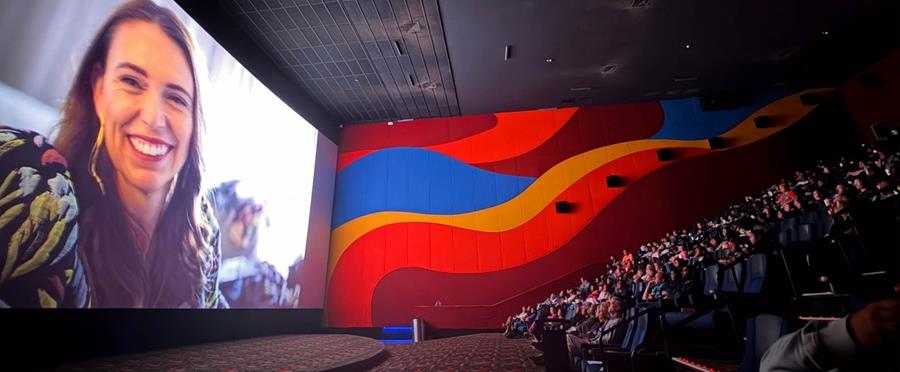
Screening of Prime Minister at the Opening of the 6th Pacific Human Rights Film Festival at Damodar City Cinema
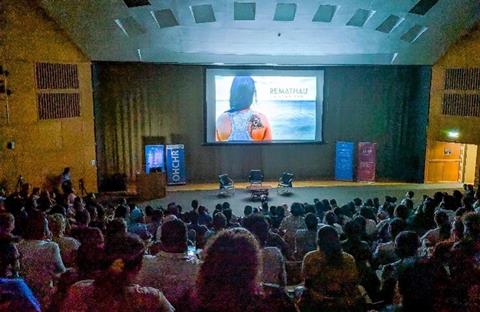
Screening of Remathau: People of the Ocean at USP

6th Pacific Human Rights Film Festival moviegoers watch a screening at Damodar VX screen.
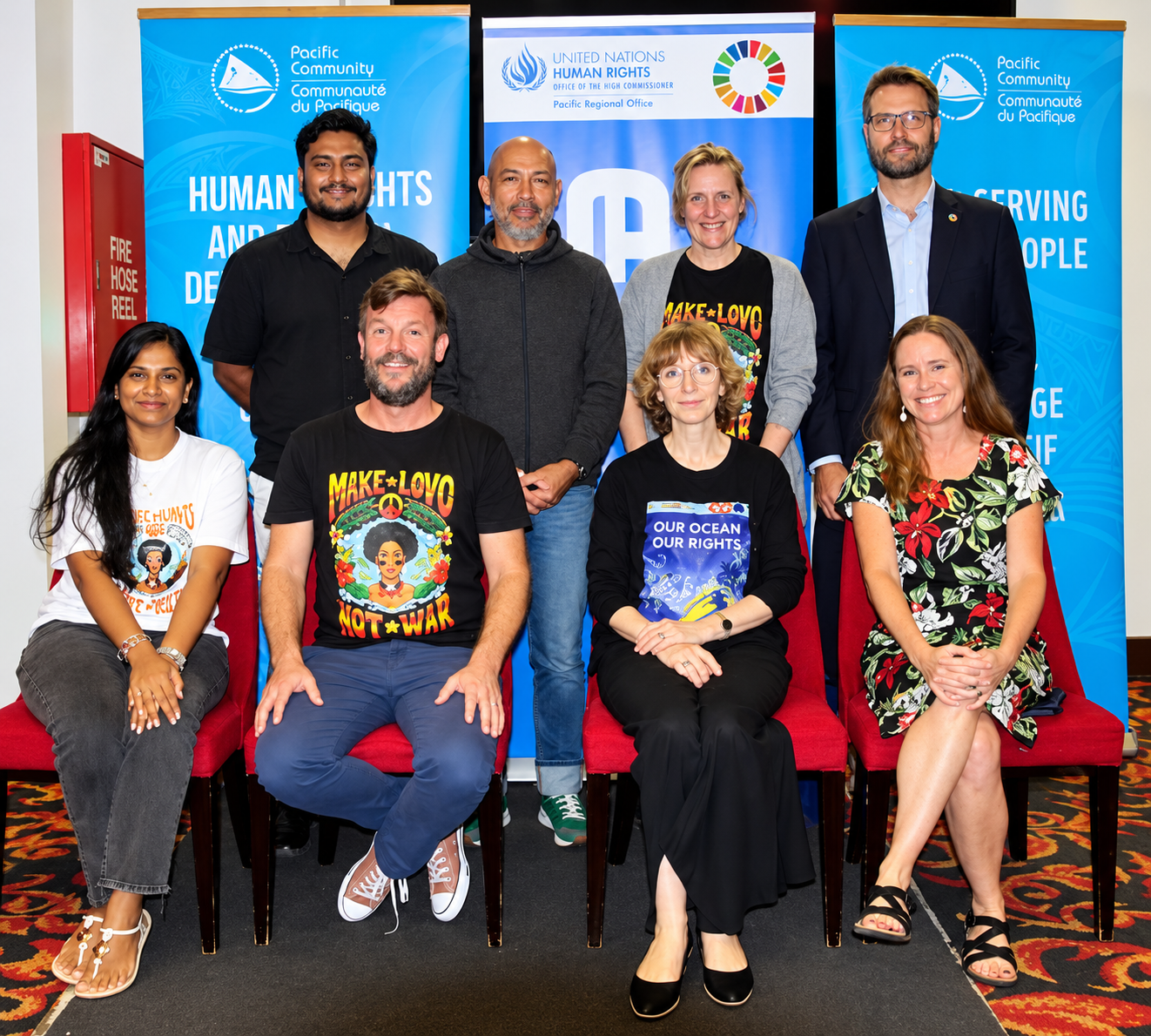
Closing ceremony of the 6th Pacific Human Rights Film Festival (PHRFF).
From left to right: Bottom row: Rhea Kumar, PHRFF intern; Ben Wheeler, Festival Director, Heike Alefsen, Regional Representative, Pacific UN Human Rights Office; Karine Gatellier, PHRFF Activity Lead, SPC.
Top row: Zoyal Ali, PHRFF intern; Miles Young, Director, Human Rights and Social Development divison at SPC; Dr Milla Vaha, Deputy Head of School, School of Law and Social Sciences, USP; Sebastien Gillioz, Deputy Representative, Pacific UN Human Rights Office.


