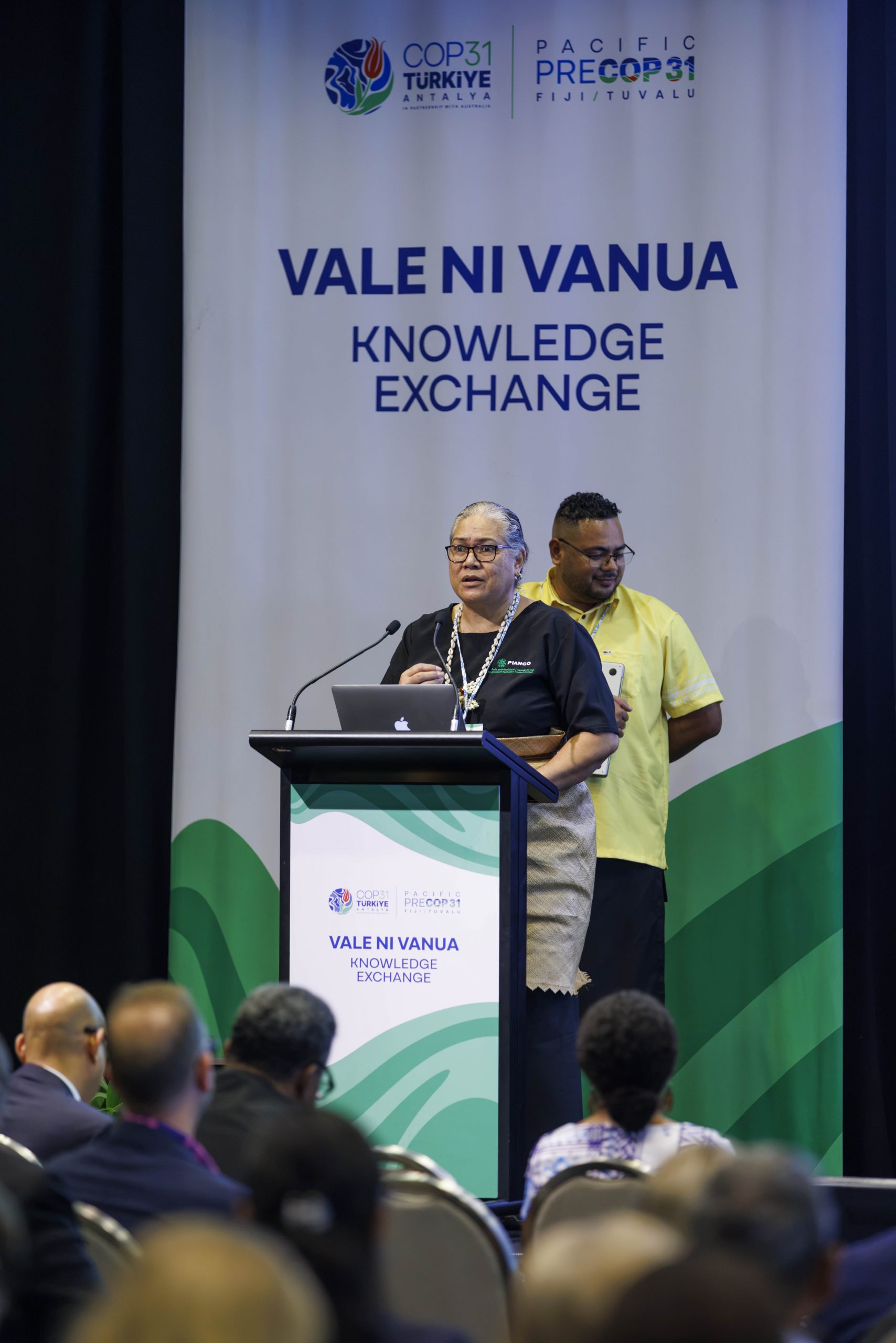
Pacific civil society must have a stronger role in climate negotiations and in planning for disasters and community relocation, Emeline Siale Ilolahia, executive director of the Pacific Islands Association (PIANGO), said in remarks to leaders and negotiators.
“Civic space in a difficult environment is critical,” Ilolahia said, arguing that community organisations should help shape policy before negotiations and carry the resulting discussions back to villages, households, schools and churches.
Her appeal was grounded in what she described as the everyday organisational strength of Pacific communities, where families and neighbours coordinate attendance at funerals, weddings and other events, often paying their own way because showing up matters.
“We are the best organisers,” she said, describing how families divide responsibilities so members can attend events across their communities.
That capacity, she argued, is part of civil society’s contribution to public decision-making, not simply a resource to be tapped for small, short-term projects.
Ilolahia called for a shift away from treating local organisations primarily as implementers of small grants.
Such projects, she said, can have limited reach and may fail to serve people who cannot access a central venue.
A project based at a community hall, for example, may not be accessible to people with disabilities, she said, arguing that support needs to reach households and communities directly.
The remarks also linked climate policy to movement within families and communities.
Ilolahia said discussions about mobility were already taking place at household level in Pacific settings, with older people sometimes choosing to remain while younger relatives move.
She urged negotiators attending pre-COP meetings and COP to ensure discussions did not remain confined to conference rooms.
“Those that are represented in our rooms, come back, make sure that those conversations are happening in our house, dinner table, our classroom, even Sunday school,” she said.
Ilolahia added that she had been a Sunday school teacher and that climate discussions were relevant in those settings too.
She outlined two roles for civil society: participating in the thinking and evidence-gathering process, and being included in foresight and planning.
Community groups should have access to academic findings and be able to contribute traditional and Indigenous knowledge, she said.
“We can bring our traditional understanding and our traditional knowledge and indigenous to inform those things, because it makes sense to us,” Ilolahia said.
She also argued that communities with experience of fires, tsunamis and earthquakes could contribute to anticipating future risks.
“We are good at predicting. So give us that opportunity to do that,” she said.
Ilolahia framed the appeal as a demand for meaningful participation in decisions affecting Pacific communities, including the negotiations that shape climate policy.
Civil society, she said, should not be expected to withdraw from the process after taking part in pre-COP or COP discussions.