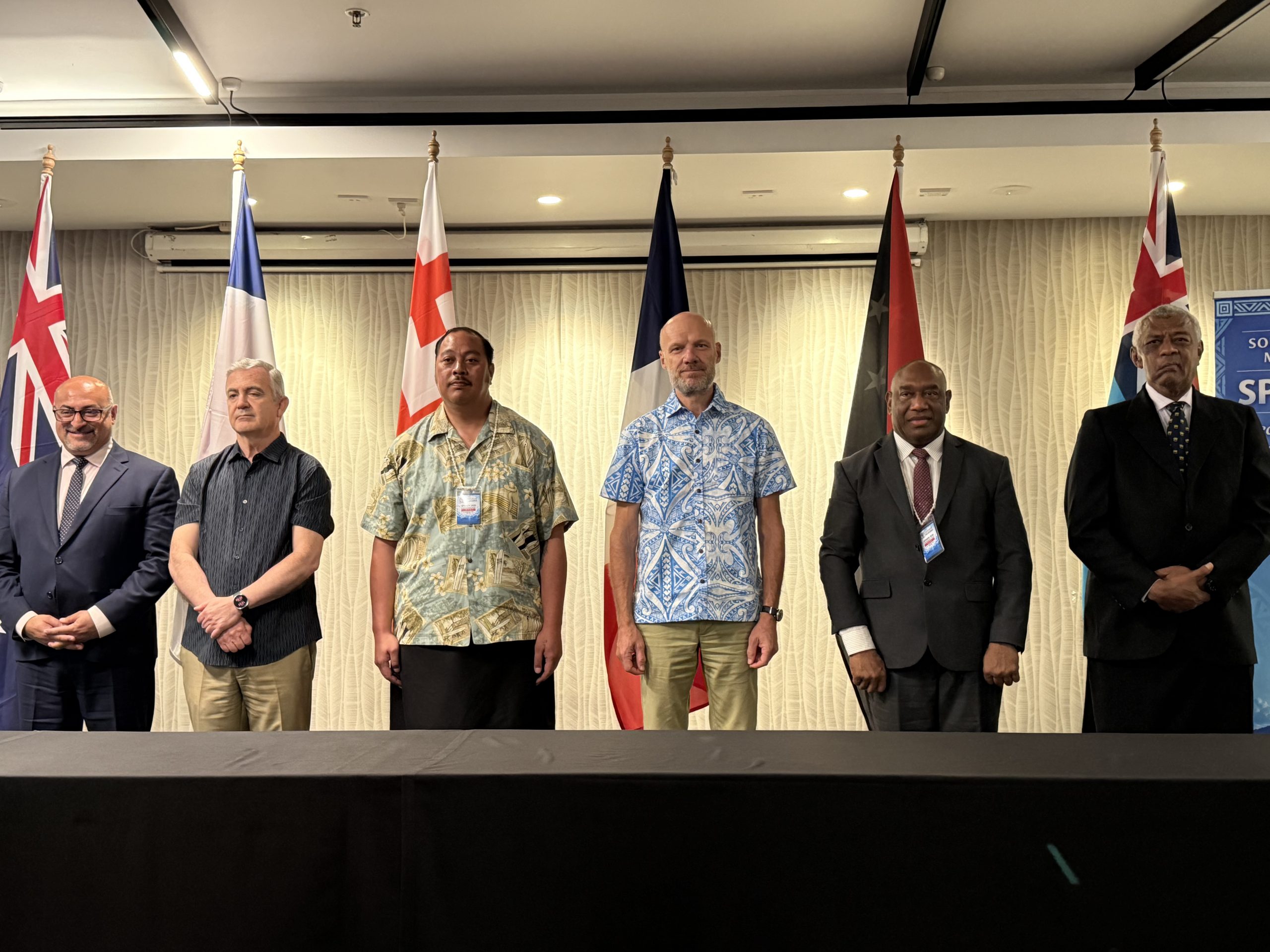
FIJI’S Defence Minister Pio Tikoduadua closed the South Pacific Defence Ministers’ Meeting with a call for collective action, speaking on behalf of ministers and the delegation.
Pacific defence leaders have committed to deeper regional cooperation on disaster response, peacekeeping and transnational crime, declaring that no country can secure the Blue Pacific alone.
Meeting under the theme Securing the Blue Pacific: Collective Responsibility, Resilient Futures, participants said the region’s security challenges demand a shared response, regardless of the size or capability of individual countries.
“No single country, regardless of its size or capability, can address these issues alone,” Tikoduadua said.
Tikoduadua said the meeting had grown into a respected forum for honest dialogue, strategic engagement and practical collaboration among countries with a common interest in a peaceful, stable and resilient Pacific.
“Importantly, this forum allows us to move beyond discussion and focus on actions,” he said.
The three-day talks covered transnational organised crime, climate change and the Pacific Response Group, the meeting’s regional response mechanism.
But the minister argued that the forum’s real “centre of gravity” was not a policy document or military capability. “It is my belief that for the SPDMM, our centre of gravity remains our relationships,” he said. “They are what enables us to cooperate so effectively when training, exercising and ultimately deploying together.”
Those relationships, he said, allow officials to “pick up the phone and call one another in times of crisis”. That trust underpinned a gathering focused on practical outcomes. “This forum is about action, not just talk,” Tikoduadua said.
Among the key outcomes was progress towards expanding the Pacific Response Group’s mandate to include stabilisation operations. “We agreed to take a phased approach to this work,” Tikoduadua said, noting the need to consolidate the group’s existing humanitarian assistance role before taking on broader responsibilities.
The meeting also advanced cooperation on peacekeeping, including coordinated training and exercises.
Participants agreed to begin formal negotiations on a status-of-forces agreement to establish a legal framework for future regional deployments involving the Pacific Response Group.
“As a collective, we recognise the intensifying threat of transnational organised crime in the region and its impact on our communities,” Tikoduadua said.
Ministers agreed to explore how South Pacific militaries could contribute to the Waqa Moana concept endorsed in principle by Pacific Islands Forum leaders. The discussions repeatedly returned to the need for consultation, coordination and regional consensus.
To strengthen that connection, the Pacific Islands Forum Secretariat will become a standing observer at the defence ministers’ meeting, while work continues to establish a defence adviser position within the Secretariat.
Australia was announced as the next host, carrying forward a regional agenda built on the principle that the security of the Blue Pacific is a collective responsibility.