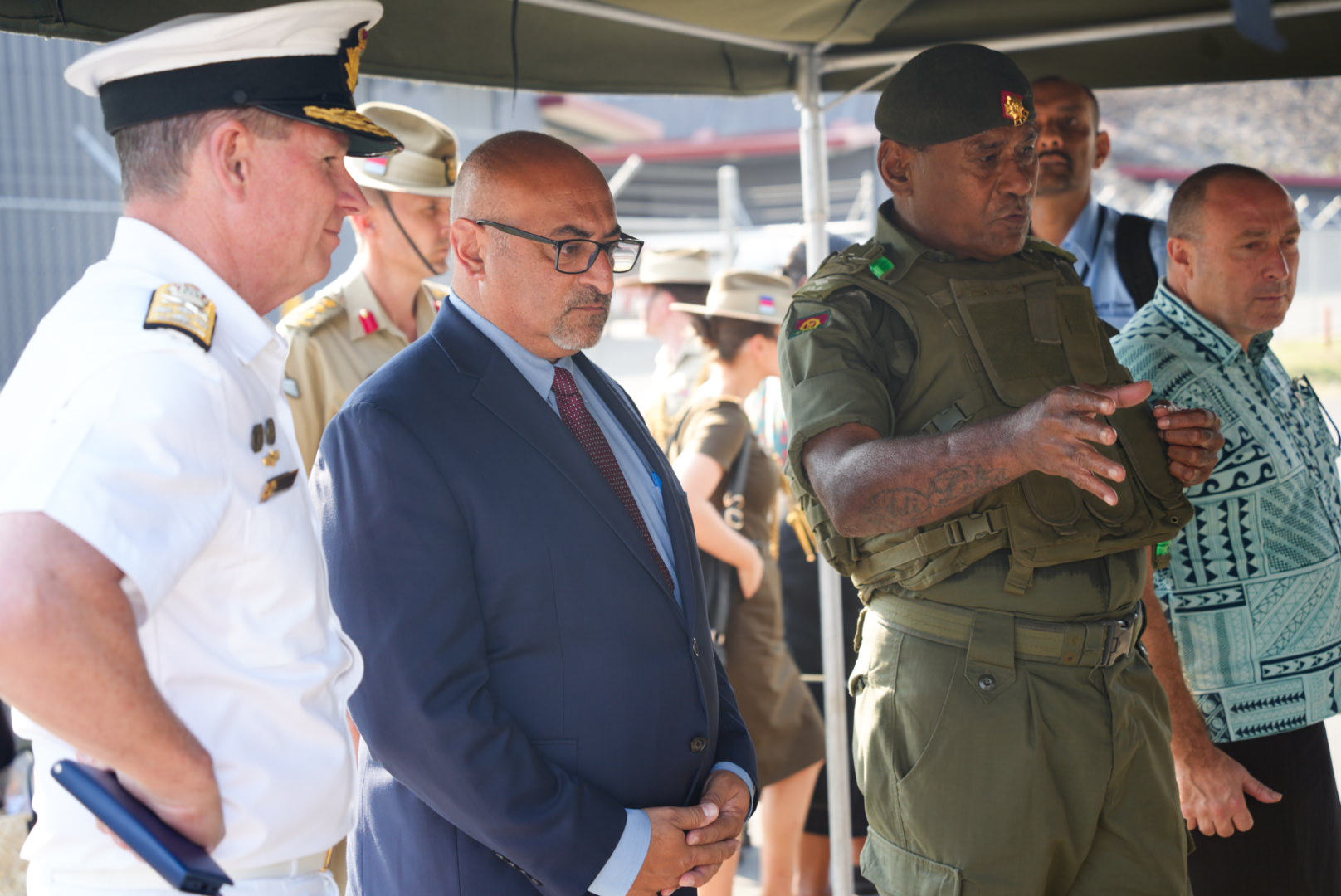
AUSTRALIA and Fiji have reaffirmed their commitment to a peaceful, stable and prosperous Blue Pacific, with sovereignty, Pacific leadership and regional cooperation at the centre of their expanding defence relationship.
Australia’s Assistant Minister for Defence, Peter Khalil, said cooperation between Pacific militaries was both a regional asset and “an investment in our shared resilience”.
He said Australia would continue to listen to its neighbours and allies, support Pacific-led solutions and work to preserve a region where sovereignty is respected.
Khalil highlighted the Vuvale Union and the Oceans of Peace Alliance as significant developments in the Australia-Fiji relationship.
He said the Vuvale Union would deepen integration between the two countries’ security sectors, economies and people.
The Oceans of Peace Alliance is a mutual defence treaty committing Australia and Fiji to come to each other’s aid at times of greatest need.
“Together, we are always stronger,” he said.
Khalil also acknowledged Fiji’s leadership in developing Waqa Moana, a Pacific-led initiative aimed at strengthening maritime security, information sharing and regional resilience.
He said the initiative reflected the priorities of Pacific leaders and supported a coordinated regional response to shared security challenges.
Khalil said Australia would continue working with Fiji and other Pacific partners on practical initiatives to strengthen maritime security and address transnational and serious organised crime.
At BlackRock Camp, Khalil described the peacekeeping, humanitarian assistance and disaster relief camp as “very, very impressive”.
He said BlackRock was a key component of Australia’s defence partnership with Fiji and supported security training for the Republic of Fiji Military Forces.
He also praised Fiji’s long-standing contribution to international peacekeeping operations and its regional leadership.
Khalil said Australia remained committed to working with Fiji and other Pacific nations to build a stronger Pacific family.
He said the partnership was intended to support Pacific countries to make their own decisions as “strong, sovereign nations”, free from coercion and able to protect their way of life.